Dealing With Stupid and Rude People

82957300_zps9ce11709

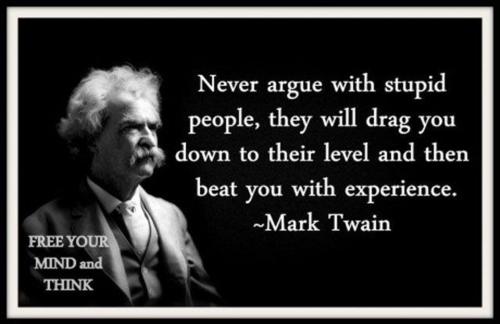
I never could figure out why there were people who flaunted their ignorance, rudeness, and stupidity.  To look at some of these fools, you would think they were getting paid to be clueless and cruel.  I never understood why it is that dumb is cool, smart is lame, being a jerk gets you places, and being a humanitarian is a loser’s bet.  But then, I never could figure out why most people act the way they do.  There are times I think those who would be considered mentally stable are the ones who actively work against their best self interests.  It used to be far more frustrating than it is now.

It doesn’t bother me much now that I’ve just accepted that many people I meet are going to be stupid and mean.  I really try to keep my wisdom to myself if I sense my advice will fall on deaf ears.  It is tough as the intelligence finds ways to pop up at the worst times.  I’ve been accused of being a ‘show off’, a ‘know it all’, and even intimidating simply because the intelligence doesn’t stay hidden for long.  But it doesn’t really bother me anymore that people are going to do stupid and rude things.  The outside world is messed up but I don’t have to be.

I consciously choose not to be messed up.  The fact I consciously choose my actions and thoughts puts me far ahead of the bulk of humanity.  I’ve seen far too many people who go thorough life just drifting along and not really examining what they can do or what they want.  After much trial and error, I’ve come to the conclusion that I’ll never do well at a traditional type of job.  It seems anymore that my best chances of having any kind of purpose or money that a traditional job would give people will be through something internet based.  Which is fine with me as I never could stand being told what to do and how to think.  I think many people with anxiety problems and social awkwardness would do well with an internet based set up.

I try not to let stupid and rude people get to me.  I’m not perfect at it.  But I’ve gotten to where I no longer envy or resent them.  Most of the people that act stupid and rude are not interesting or thought provoking.  They are not rare.  I choose to be conscious of what I do and think.  I choose to be different.  I choose to stand out.  I choose to not be stupid and rude.

Changes In Sleep And Mental Illness

With my mental illness, one of the early warnings of problems is changes in sleep.  If I go too long without consistent sleep I’ll have problems with anxiety and irritability.  If I have several days of too much sleep I’ll have issues with depression and apathy.

Since I have become aware of the importance of consistent sleep, I’ll make changes to my behavior if my sleep has been erratic for more than a few days.  Recently I had been getting only five to six hours a night, and not usually all in one setting.  To bring my sleep back into line, I reduced caffeine and stopped drinking water two hours before bedtime.  I’ll also stop reading or using my laptop in bed for awhile.

Another useful technique to get myself back into consistent sleep is breathing exercises.  I’ll just deepen and slow my breathing until I am relaxed in both my body and mind.  This may take only a few minutes or it may take almost an hour, depending on how tense I am.

In the past when I was sleeping too much I would run into problems with depression and apathy.  I’ve found when I am physically active and more outgoing socially, these help to reenergize me.  I really haven’t had problems with too much sleep since I’ve been more active physically and socially.  When I wasn’t active physically or socially I’d find myself sleeping almost twelve hours a day.  I’d sleep out of depression and boredom and I’d be depressed because I slept so much.  It’s a vicious cycle that has to be broken.

Too little sleep and too much sleep can cause problems with mental stability.  While researchers say the idea amount of sleep is seven to eight hours, this is a guideline.  It varies among individuals.  The best way of treating sleep, and all problems in mental health, is knowing what works for yourself.  A brilliant philosopher from ancient Greece, I believe, once said “Know yourself.”  Good advice for anyone.

Self Talk and Respecting Ourselves

lisa_sobaka

In one of my earlier posts I wrote about hiring a new counselor.  I’ve been seeing him every two weeks for four months.  The relationship on a professional level has been established.  The large theme we found is that I often have self defeating thoughts.  My counselor thinks we get caught up in negative thinking about ourselves and act on thoughts whether we are aware or not.

At first I thought this was one of those meme type philosophies like ‘what you think about comes about’ that oversimplifies.  For years I thought my mental health problems were mostly the result of a bad draw when it came to genetics.  The more I went into what my counselor was saying, the more I realized I wasn’t being proactive enough in my thinking.  I was allowing bad things and poor thoughts to happen because I thought I was essentially powerless to change what was happening in my mind.  I had fallen into the trap of being too reliant on psych medications and not adjusting my thoughts and behaviors.

While psych medications can knock down some of the immediate anxieties and depression, they are unable to address the issues of behaviors and self image.  A med can’t make anyone think better about themselves.  We still have some control over what we tell ourselves and how we see ourselves.  We are not condemned to a lifetime of failure because we have mental health problems.  I have heard about too many people with issues to think depression and anxiety are death sentences.  Just Google or Wikipedia Famous People With Mental Illness and you’ll see names including Noble Prize winners (John Nash), U.S. Presidents (Abraham Lincoln), musicians (Syd Barrett of Pink Floyd), and so on.  I would argue that famous explorers and inventors like Daniel Boone, Thomas Edison, Nikola Tesla, Leonardo da Vinci, etc. would have been considered ADHD and problem children by 21st century standards.  Some people simply don’t fit some preordained little box to be ‘normal citizens.’  People like this are the ones who change the world for the better and make life more interesting.  Just because someone is quirky and doesn’t fit in socially doesn’t mean that person is doomed to a life of pain and obscurity.

What we think about and act on has an influence on our lives.  Once I took charge of my health, started dwelling on how I can make myself healthier, started exercising, started to eat healthy, my physical health began improving.  It all started with the idea that I could go against my previous trends and improve my health.  I’m finding the same thing with my mental self image.  As I’m thinking, and acting on, the idea I don’t have to be threatened by feelings of anxiety or depression, things are improving in those regards.  As I think, and act on, the idea I don’t have to believe anything anyone says, my life has changed for the better.

Once I accepted that I don’t have to always be the one giving without receiving good in return, I have found that others respect me more.  I respect myself more now.  Feel free to tell others ‘no’ when you aren’t up to helping them.  Tell others ‘no’ when they keep taking from you without giving anything back to you.  You know what it’s like to be disrespected.  We all do.  Ways to get more respect include respecting yourself, setting boundaries, telling others ‘no’ when they are using you and treating you poorly, and don’t go out of your way to bend to whims of disrespectful people.  If you don’t think you should respect yourself, don’t expect respect out of others.

Talk yourself up.  Start small if you have to.  Do not buy into the idea that you have to be humble and groveling at the feet of others.  Far too many people believe that being humble means thinking poorly of yourself.  Because people think poorly of themselves, they allow themselves to be victims of their circumstances, their diagnoses, and of every hustler and con man who comes along.  Think well of yourself.  Treat yourself with love and respect.  Think good about your ability and accomplishments.  We all have accomplishments and talents.  We just discount them because they are ours.  We, mentally ill and neurotypical alike, need to talk more dignity, honor, and respect into ourselves on a daily basis.  If we don’t hold ourselves with higher regard, we have no reason to be sickened when others won’t treat us with dignity and respect.  What we think about and act about does come about.

Good Times and Bad Times With Schizophrenia

238943_v1I have found when I talk to chronically normal people about what life with a mental illness is like, they are often surprised that it mental illness isn’t always the same all the time.  They seem to be shocked I have good days, let alone times when I laugh out of happiness.  I imagine that even informed normals just think that someone with mental illness problems has nothing but problems.  Some just think that because I deal with schizophrenia that I have delusions, paranoia, agitation, and depression all the time.  Not so.  The Hollywood images of the mentally ill being in a hospital being zombie like or loudly ranting isn’t entirely true.  Just because there are those with mental illness who sometimes zone out or act ‘stark raving mad’, that doesn’t mean that even those are like that all the time.  No it isn’t all doom and gloom anymore than it is all wine and roses.  We have our good days and bad days just like even the most chronically normal individuals.

It may be a jaw dropping shock to some, I do have good days even with a mental illness.  I do experience moments of what I understand to be happiness.  I have times where I am not depressed.  I have times when I am not delusional or paranoid.  In fact, most of the time I am not delusional or excessively paranoid.  When I do have my problems, sometimes it’s only with depression.  Sometimes it’s only with excessive agitation or annoyance.  There are some times I deal with depression and paranoia at the same time.  I am occasionally depressed and delusional when I do feel that living a life with a mental illness is hopeless and better treatments or, gasp, an actual cure for mental illness will not be coming.  Fortunately it is only rare that I deal with agitation, paranoia, and delusions all at the same time.  That usually only happens only a handful of times per year, with the worst instances coming in late summers.  It is those very rare times that cause me, and my friends and family, the most grief.

Delusions that can’t be shaken for a while, crippling depression, being easily agitated, and excessive paranoia are the worst problems I have as a man with schizophrenia.  The hallucinations are taken care of as is the impulsive behavior.  Even when I am at my worst, my bark is far worse than my bite.  But even then, I can usually be talked down out of it within a couple hours.  It can be a lively conversation for those couple hours, and that’s putting it politely.  Fortunately I haven’t hurt myself, anyone else, or gotten myself hurt by anyone else during those times.  Even with the four major symptoms of my schizophrenia, I usually experience only one or two at a time.  That is most of the flare ups I have.  The instances where I have three symptoms at once are rare.

Strong Emotions and Mental Illness

I have always been one that’s had problems with hiding my emotions and feelings.  Even before I had mental illness problems I’ve always felt deeply, loved deeply, had strong opinions about things I cared about, etc.  This has often gotten me in trouble at school, in social situations, at jobs, and especially among family and friends.  I have no idea how many friends I have lost, how many jobs I’ve been fired from, how many teachers and potential allies I’ve alienated, and how many arguments I had with family members over the years.  This was all because I felt deeply, wasn’t afraid to go against popular opinions when I felt they made no sense, and was often too stubborn to back down from someone I felt was in the wrong.  Sadly, as a result of these strong feelings, I never really developed strong social skills, learned how the games of socializing and workplace politics were played, or learned until I was well into my early 30s that people would rather a person be polite and wrong than be less than tactful and in the right.  It wasn’t until I was in my early 30s that I learned that when dealing with groups of neurotypical individuals, it was better to have a good image and weak emotions than it was to have strong character, strong emotions, but a less than good image.  The smartest and most right man in the room is  ignored in favor of the one who acts and looks the best without upsetting people.  It is simply the way most humans are.

As a result of developing a mental illness, my emotions, feelings, and opinions are actually stronger than they were in my youth.  I have learned, despite these stronger emotions, to keep my mouth shut the vast majority of time when in groups larger than two or three people.  This is especially true when dealing with people I don’t know well.  I never could figure out why, but most neurotypical people greatly fear strong shows of emotions.  So I often find myself bottling up my emotions (whether its anger, anxiety, sadness, depression, or even happiness) for fear of upsetting others.  Some would argue that I am a stoic, unfeeling person just by watching my interactions with others.  This is far from the truth.  I feel very deeply, so deeply I try to not show emotion at all when around those I don’t know.  I imagine much of this comes from being raised in a family and rural farming community were strong displays of any emotions were strongly discouraged.

It is very tough for me to bottle up my emotions, especially with a mental illness.  It wasn’t until a few years ago I realized just how threatened and fearful of strong emotions most people (at least here in USA) really were.  I never considered myself a threat or intimidating to anyone.  I was actually a long running joke growing up because I couldn’t physically defend myself from bullies (I never won a fight in my life despite being the biggest kid in my school) or knew when to shut up on issues when I knew I was right and everyone else was wrong.  In my social interactions I am always picking my words and phrases very carefully so not to upset others.  This leads to even more social and work problems because most people assume I’m either not genuine or am a complete liar.  I’m not being a fraud, I’m just trying not to show emotion one way or another.  I often feel like it would be better to be an emotionless robot as opposed to having as strong of emotions I do.

I would love to hear from others who have problems with strong emotions, socializing, and mental illness.  Opinions and stories from readers are always welcomed.

Seasonal Aspects of Mental Illness

10294454_4277668317238_353607190635132529_n


It’s been awhile since I last posted anything of my own doing on this blog.  For that I apologize.  Sadly, it has been a rougher last few weeks than normal.  Yet this was expected as late summer, especially the month of August and early September, have traditionally been the toughest times of year for flare ups of my mental illness.  There is in my case seasonal aspects to my mental illness problems.  Both times I committed myself to a mental health facility have been early in September after weeks of buildups of problems that usually began about late July.  After having these mental illness problems and seasonal flareups for going on seventeen years now, I have come to see that there are times of the year when my illness is often far worse than normal.

Even though I know and acknowledge that there is a seasonal aspect of my mental illness, I still haven’t pinned down an exact why it is in late summer.  Often, people with seasonal aspects of mental health problems tend to have their problems in the winter or during times of the year when they experienced at least personal tragedy.  I doubt in my case that my seasonal aspects are due to personal tragedy as people who have died that were personally close to me have almost without exception died in the winter months.  It could be that my seasonal problems have to do with weather as late summers in my home state of Nebraska are typically very hot, occasionally humid, and often suddenly changing.  I personally always enjoyed cooler weather as my favorite times of year are autumn and spring.  I don’t really mind winters that much except that I personally don’t like driving on snow packed and ice covered roads that are the norm in my part of the USA.  Regardless of my appreciation for the change of seasons, don’t sign me up for summers in Texas or winters in Minnesota.  I have college friends from both places and I’ve heard their ‘horror’ stories about the weather.

I no doubt have times of the year when my mental illness is worse than others.  Unlike many people, my problems are often in the summers instead of the winters.  I still haven’t figured out the why as to this.  I simply know after having these problems for at least seventeen years that there are trouble times in the course of the year.  I’ve come to understand this and plan accordingly.


Mind Health, Body Health, Placebo Effect, Expectations

I imagine this entry is some continuation of my last post.  I am absolutely convinced there is actually quite a bit of crossover between how one feels mentally and that can influence physical health and well being.  Likewise I am convinced there is a crossover in how one’s physical health and influence mental health and stability.  About the only real ‘scientific’ evidence I can truly point to support my convictions are ‘placebo’ effects.  In some medical studies where the patients, and sometimes even the primary doctors, believed that they were getting real medications but were in fact actually getting pills that actually had no real medication.  Many of the results of these tests found that the patients who received the placebo, or inert, pills often did just as well as the patients who were taking the real medications.

I will state up front, I am not a doctor.  I am by no means suggesting that anyone, mental illness or no, should go off any medications without a doctor’s supervision.  I am not qualified to treat, diagnose, etc. anyone.  I have issues even with my own problems and life. 

What I am getting at is that sometimes something, whether it be a treatment, medication, set of beliefs, set of actions, etc. works for us as individuals because we believe they were work and we want them to work.  I suppose it’s sort of like if someone thinks they do well at a job because they look and act the part, then that is true for that person.  I would even venture to say this applies to even basic human emotions, such as love and anger.  If you think you are in love, or angry, with someone, then you are.  I guess that if you think something works for you, then maybe it does for you.  Some of the wisest ideas I ever came across can be expressed by this short statement, “I think, therefore I am.”

Think about this for awhile.  If you, or someone you know, are always complaining about things that you either have or control over or won’t do anything to change, why should you expect to have any happiness at all?  I’ve heard many philosophers, gurus, experts in many fields, etc. state that what a person thinks about will come about.  That’s only part of the equation.  What is really should read is something like, “What a person thinks about and acts about will come about.”  I suppose the phrase “I think, therefore I am” should be coupled with “By their deeds you will know them.”

I didn’t really start feeling really good mentally until I, along with my writing and promise to myself that I would never stop learning, decided to improve my physical health.  Yes, reforming my previous coach potato ways were tough.  I even failed at these attempts the first few times.  Yet, I can tell you that after the first four months of getting as serious about my physical health as I am about my mental health, it is more than worth the work I’m putting into it.  Though I am not close to making my ultimate health (and weight) goal, I am far better off physically and mentally than I was even four months ago.  I personally believe the improved physical health is breathing new life into my mental health.  Likewise the renewed mental health is fueling the improving physical health.

No, I don’t have more scientific evidence that mind-body, body-mind health effect each other besides the placebo effect.  But I know in my own life, and experience, there is a connection.  I truly am convinced of this.

Goals, Past Regrets, Looking Back on 2013 and Looking Ahead to 2014

2013 has come and gone.  We have recently celebrated the beginning of a new year.  With new years come, for many people, resolutions.  I personally have never been big on setting new year resolutions as most people I know never follow through.  Yet I feel different about this year, the year 2014.

The reason I feel different about setting goals, rather than calling them resolutions, is that I have been essentially drifting with whatever way the winds of my mental illness toss me ever since I left a good job over a year and a half ago.  The job I had, while hardly high paying or even full time, gave me a sense of purpose and a reason for leaving the apartment every day.  Leaving that job was one of the dumbest decisions I ever made.  I may have not made much money from it, the job may have been simple and low prestige, but it gave me a reason for getting out and mingling with people.  In fact I was doing more creative writing while I was working than when I left.  Having all the time in the world free often leads to not doing anything with that time, or having a lack of direction or purpose.  

I trace many of my problems with depression in 2013 directly to not having much direction in my life.  While there are many people out there, mentally ill or not, who don’t need a job or volunteer work to have direction in their lives I’m not one of them.  I know now I need something outside of myself to allow for some sort of structure in my day to day life.  Otherwise I’ll just rot from the inside out, physically and mentally.

My first goal for 2014 is to find a part time job.  I would prefer something where I could work in a small group or even alone without much interaction with the public.  I never did very well at customer service jobs, fast food jobs, etc.  After a dozen plus years of working with a mental illness I have figured out what kind of work I’m not good at.  I would like to find a job by the end of February, but with my checkered work history this may be pressing it.

My second goal for 2014 is get to the gym more often.  Sure I go once or twice a week as it is now, but I want to go more often.  I always feel good after going.  I don’t know why I don’t go more often.

Finally, I want to write more in 2014 than I did in 2013.  I didn’t get much finished last year.  I want to change that this year.  I am going to change that.  The only way to make any goals stick is to go after it whole heartedly and without regret.

Inactivity, Depression, and Seasonal Components to Mental Illness


In this life with schizophrenia, I have had my ups and I have my downs.  Lately, actually for the last three months at least, I have been more inactive than I should be.  I haven’t been exercising every day like I should be.  Usually I go for short walks everyday and lift hand weights two to three times a week.  Haven’t been doing that as often lately.  And I can tell it’s starting to take it’s toll.  I don’t have as much energy to accomplish everyday tasks as I once did.  I also have been lacking the motivation to work on my writings,  unlike a few months ago.  In addition to these blog posts, I also write poetry, journals, and am working on a novel.  I currently have two books of poetry self published through lulu.com.  I figured if I don’t have a regular job, I need to find some way to keep myself occupied and somewhat productive.

As a result of my inactivity I can tell my physical health has suffered.  I have more aches and pains than someone in their early 30s should.  I attribute this to way too much inactivity.  I am convinced my inactivity was initially brought on by a bought of depression that was bad enough that I checked myself into a mental health hospital for four days back in September.  After I got out of the hospital I would sometimes sleep twelve to fourteen hours a day.  Some days I would sleep just out of depression, while others I would sleep out of boredom.  It became a nasty cycle.  I would sleep out of depression and I would be depressed that I was missing out on what was going on around me.  I would be too tired and or depressed to do my exercise and my socializing.  And I would be tired and depressed because I wasn’t exercising or keeping up with friends and family.

Even though I have been depressed and inactive for a long while, I feel like I’m starting to pull out of it.  Maybe it’s the change of the seasons or the hope of the upcoming new year that’s helping me out of my current depression.  Or it could be one of the phases of my individual illness.  This isn’t the first time I have gone through a period of inactivity and depression.  I went through one similar to this about six years ago, back in the fall of 2007.  

One of the positives about having had a mental illness for over half of my life is that I can recognize many of the patterns of the illness.  Not only can I recognize the triggers and know what places, types of situations, and people to avoid, I know a lot of the short term and even some of the long term patterns.  Many people with mental illness have a seasonal component that goes along, where they do worse during some periods than others.  For me, I have always done bad in late summer, usually August and early September.  For others it’s during the winter.

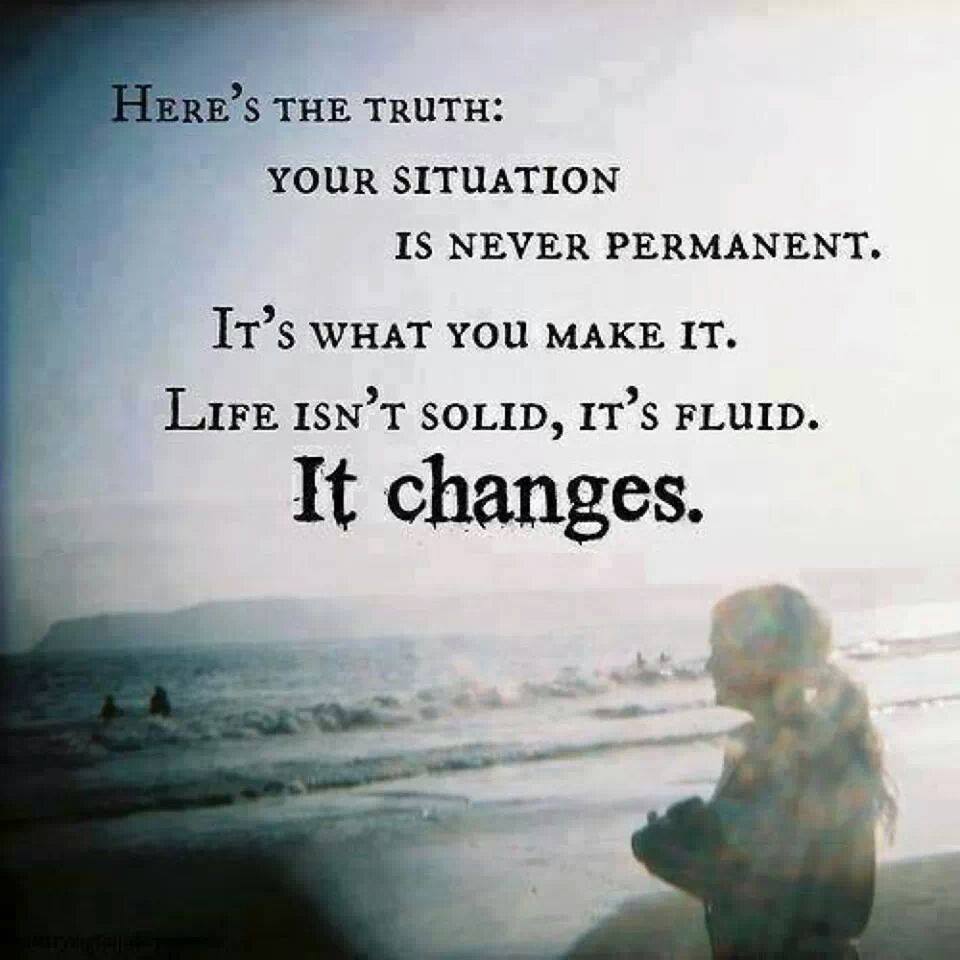
I always have had to remind myself during these days of depression during the last three months that I’ve been through these times before.  I’ve come through these times before.  And I will come through them again.  Better times will be ahead.

Medical Advances, Nutrition, and Mental Illness

It’s been a long while since I last posted to this blog, so an update is in order.  This post will be about medical advances and mental illness.  This is another reason for those of us with mental illness to hope that the future will be better than the present.  Many of the medications that are being used to help treat mental illnesses now didn’t even exist fifteen, twenty years ago.  

New discoveries are also being made in nutrition and how full body health effects mental health.  If you don’t get proper nutrition, the body won’t function well.  If the body doesn’t function well, the brain won’t either.  We all need to make it a point to eat healthier and more balanced, mental illness or no.  Let’s not kid ourselves, the typical American diet of highly processed foods and fast food isn’t healthy.

If you are under treatment for mental illness, always tell your doctor about all of the over the counter supplements you are taking.  Some of these, especially herbs and anything with alcohol in it, can cause serious side effects when mixed with anti-psych drugs.  Know what you are getting into.  Stay informed.  Read all of the handouts that come with your anti-psych drugs.

There are rapid advances being made in research.  These advances can and will find better treatments, perhaps sooner than we think.