Dealing With Stupid and Rude People

82957300_zps9ce11709

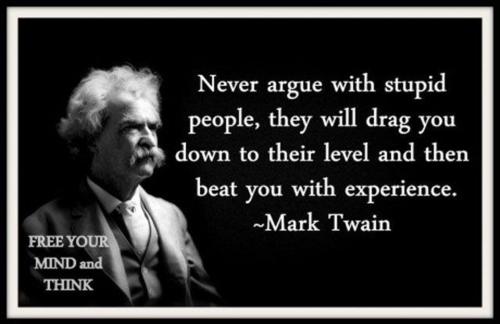
I never could figure out why there were people who flaunted their ignorance, rudeness, and stupidity.  To look at some of these fools, you would think they were getting paid to be clueless and cruel.  I never understood why it is that dumb is cool, smart is lame, being a jerk gets you places, and being a humanitarian is a loser’s bet.  But then, I never could figure out why most people act the way they do.  There are times I think those who would be considered mentally stable are the ones who actively work against their best self interests.  It used to be far more frustrating than it is now.

It doesn’t bother me much now that I’ve just accepted that many people I meet are going to be stupid and mean.  I really try to keep my wisdom to myself if I sense my advice will fall on deaf ears.  It is tough as the intelligence finds ways to pop up at the worst times.  I’ve been accused of being a ‘show off’, a ‘know it all’, and even intimidating simply because the intelligence doesn’t stay hidden for long.  But it doesn’t really bother me anymore that people are going to do stupid and rude things.  The outside world is messed up but I don’t have to be.

I consciously choose not to be messed up.  The fact I consciously choose my actions and thoughts puts me far ahead of the bulk of humanity.  I’ve seen far too many people who go thorough life just drifting along and not really examining what they can do or what they want.  After much trial and error, I’ve come to the conclusion that I’ll never do well at a traditional type of job.  It seems anymore that my best chances of having any kind of purpose or money that a traditional job would give people will be through something internet based.  Which is fine with me as I never could stand being told what to do and how to think.  I think many people with anxiety problems and social awkwardness would do well with an internet based set up.

I try not to let stupid and rude people get to me.  I’m not perfect at it.  But I’ve gotten to where I no longer envy or resent them.  Most of the people that act stupid and rude are not interesting or thought provoking.  They are not rare.  I choose to be conscious of what I do and think.  I choose to be different.  I choose to stand out.  I choose to not be stupid and rude.

Worry and Stress

ftchagrin-11-23-13_zpsb5feb807

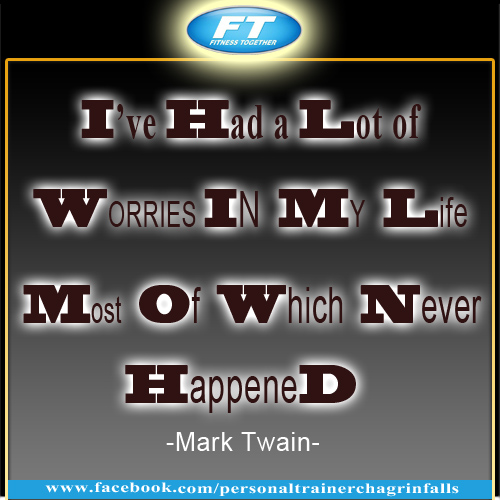
Worry and stress hinder the mentally ill and the neurotypical alike.  No one can escape it.  It served us as a species well for most of our history when hunter gatherers needed successful hunts and fight other bands.  Otherwise they would die.  Worry and stress are natural to us.  It allowed humans to go from barely surviving to modern civilization.

Yet our natural inclinations to worry are deteriorating our quality of life.  The old fight or flight mentality isn’t serving us as well.  We are seeing more people going through depression, panic attacks, anxiety problems, and physical health problems brought on by mental stress.  We haven’t yet developed the ability to mentally let go of worry.  This skill is not natural to us.  It has to be learned.

Learning how to let go of stress and worry, even with years of practice, won’t be perfect.  I have been taking steps to lessen my worry for several years and I occasionally slip into old habits.  Things I have found helpful include keeping journals, engaging with negative people as little as possible, venting slightly on occasion, and never watching news broadcasts.

When I keep journals, I don’t hold back. I write my frustrations, my anxieties, my annoyances, my fears, and the delusional thoughts that sometimes accompany my mental illness.  I get it out of my mind and onto paper.  But I don’t share these with anyone.  It does me much better to vent on paper rather than hold these worries in and drop them on someone else all at once.  Many of our problems with stress, I am convinced, come from the idea that we aren’t allowed to vent or have to put up a good front at all times.  I can’t change how anyone expects to act in public.  What I can do is vent in the form of pen and paper, get it out of my mind, and then move on.  Once the notebook is full, I throw it away.  Been doing this for at least two years.  It helps.  Sure I occasionally have problems and just dump my frustrations on family members.  But that’s the nature of the beast of mental illness and I do my best to minimize those blow ups.

I vent to my friends and family as needed to.  I used to be one of these people pleasers who listened to and try to solve everyone’s problems.  But I wouldn’t tell my problems to anyone.  It made me resentful and feel like I was being used.  I can’t remember when it was but during a conversation with someone I finally said, “I’ve heard enough of your problems.  Now you’re going to hear about mine.”  Fortunately for this relationship I wasn’t malicious about it.  But being resentful of listening to others problems while I didn’t stand up enough to have others listen to mine cost me at least a couple friendships.  My friends have problems.  I have problems.  We are now more balanced in talking about our issues.  I don’t just do all the giving while not taking some of my own anymore.

I don’t watch any of the 24 hour news broadcasts.  Haven’t for a few years.  Why should I?  I already know there is a lot of trouble and mess out there.  Always has been.  Always will be.  I have no need or desire to know every little bit of trouble going on, whether it’s halfway around the world or halfway across my country.  Seriously, why give myself more stress and anxiety then I already have?  I can’t solve all the world’s problems.  I’m not that good.  Anyone who has any kind of awareness knows that there are serious messes in the world around them.  Just because the world is messed up doesn’t mean I have to be.  Since I learned to let go of things I didn’t personally cause and can’t prevent, my life has had fewer worries and fewer stresses.

Changes In Sleep And Mental Illness

With my mental illness, one of the early warnings of problems is changes in sleep.  If I go too long without consistent sleep I’ll have problems with anxiety and irritability.  If I have several days of too much sleep I’ll have issues with depression and apathy.

Since I have become aware of the importance of consistent sleep, I’ll make changes to my behavior if my sleep has been erratic for more than a few days.  Recently I had been getting only five to six hours a night, and not usually all in one setting.  To bring my sleep back into line, I reduced caffeine and stopped drinking water two hours before bedtime.  I’ll also stop reading or using my laptop in bed for awhile.

Another useful technique to get myself back into consistent sleep is breathing exercises.  I’ll just deepen and slow my breathing until I am relaxed in both my body and mind.  This may take only a few minutes or it may take almost an hour, depending on how tense I am.

In the past when I was sleeping too much I would run into problems with depression and apathy.  I’ve found when I am physically active and more outgoing socially, these help to reenergize me.  I really haven’t had problems with too much sleep since I’ve been more active physically and socially.  When I wasn’t active physically or socially I’d find myself sleeping almost twelve hours a day.  I’d sleep out of depression and boredom and I’d be depressed because I slept so much.  It’s a vicious cycle that has to be broken.

Too little sleep and too much sleep can cause problems with mental stability.  While researchers say the idea amount of sleep is seven to eight hours, this is a guideline.  It varies among individuals.  The best way of treating sleep, and all problems in mental health, is knowing what works for yourself.  A brilliant philosopher from ancient Greece, I believe, once said “Know yourself.”  Good advice for anyone.

A Letter To My 18 Year Old Self

10003113_10152340093435460_650990473_n

High school graduation season is in full swing in my home state.  Some times it’s tough to believe I’ve been out of high school for sixteen years.  So much has happened since I became an adult.  What follows is what I would tell myself if I had a time traveling DeLorean or funky booth like Dr. Who.

Dear Zach

You have just finished high school and your adult life now lays ahead of you shooting off into the unseen distance like the open highway in Jack Kerouac’s “On The Road.”  You didn’t take any time to appreciate the fact you graduated from high school, looking ahead to the challenges and opportunities of college instead.  You should have appreciated your time being somewhat of an outsider in your high school.  First because the people that struggle socially in high school often are the ones who adapt to the adult world better.  Be happy the highlight of your life wasn’t your last football game or Senior Prom.  You will face far tougher issues than losing the big game. You will have greater thrills than wearing an ill fitting rented suit and dancing among tinsel and paper miche decorations in a basketball gym.  Things like that will be remembered by NO ONE.

The challenges you will face in the coming years will be great and many.  When these challenges and disappointments come, you will be thankful for having developed a strong mind and ability to handle adversity, loss, loneliness and pain.  Because you didn’t have legions of fair weather friends, you will appreciate true friends and confidants.  Because you know what it’s like to be treated poorly, you will have compassion for others.  Because you didn’t allow yourself to concentrate on only academics or football or speech or your weekend retail job, you have made yourself a well rounded and well versed man.  Being well rounded won’t help you in a corporate job, but it will make you more self reliant and more aware of what’s going on around you.  It will make you interesting too.

I see you have your high school annuals.  You’ll be happy you kept them even if you go entire years without looking at them.  In coming years you will be amazed at how much you were involved, how much you accomplished, and how well prepared for college and the ‘fast times and hard knocks’ of the first several years of life in the real world.  Be happy you acted in the school play for two years, you won’t have that back.  Be happy you did three years of competitive speech, you developed courage and an ability to improvise, make split second decisions, and hide your fear from the outside world.  Be happy you played football for three years, even though you were at odds with your teammates. Not many people can say they did athletics in high school.  Millions may watch football from the stands in towns all over America on fall Friday nights, but you were part of the action.  It’s the closest you’ll ever get to feeling like a rock star or Roman gladiator.

Take joy in the fact you went to a small high school.  You may not have had dozens of Advanced Placement classes or a program for gifted students, but it will drive you to read and study on your own.  Be grateful you were unable to disappear in the crowd when you were harassed and annoyed by other students, it forced you to face your fear because you couldn’t run away.  Things like that develop courage and fortitude, running away from your problems or hiding in a clique won’t.  Be happy you couldn’t spend your days reading comic books or playing D&D.  Later on you’ll have friends whose only out of school activities were just that.  While they are good guys, be happy you had to rely on your own imagination to develop your own stories and got to draw upon real people and real experiences to find inspiration.  That, and most girls don’t find D&D and comic books fantasies very sexy.

Speaking of girls, don’t believe the nonsense you’ll date, party, and sleep around several nights a week in college.  “Animal House” has nothing to do with real college.  John Belusi won’t be your roommate.  You can go hang out, get a little crazy, etc. at times.  But you’ll be far ahead of 80 percent of your classmates when you keep things like that in moderation.  The few who do nothing but study won’t have the friends or the experiences.  You will be shot down and have girls stand you up even more in college than in high school.  You will have bad breakups, you will have terrible dates with girls, you will be frustrated, and you will have heartaches.  You will also realize that there are worse things than not having a girl in your life.  When you see high school and college classmates go through divorces and unhappy marriages, you might even be grateful for loneliness.

As far as your classes go, don’t get tough on yourself for not making Dean’s List or not graduating with honors.  Most people that get those honors studied easier subjects than Pre-Med or Business Management.  Spoiler alert, Zach, you won’t get the dream job you gunned for all the way through high school.  You will experience pains and horrors that make Dante’s “Inferno” look like an Adam Sandler comedy.  I won’t go into details because you won’t believe such things could happen to someone who worked as hard and was as ethical as you.  Just believe me when I say bad things happen to even good people.  That and no employer will ask to see your college diploma.

Zach, be grateful for the challenges ahead. They will teach you that you don’t need a prestigious job or lots of money to live a happy and content life.  You will learn the best things in life are other people and your experiences.  Be happy you went to the small college you did.  You got to make friends from all over America and the world.  Most people that go to large, prestigious universities don’t get to have the variety of friends you will.  Be happy when you get to learn early on that life isn’t about working most of your waking moments at a mind numbing job, chasing money to buy junk you don’t need to impress people who don’t care.  All I will tell you is every day you wake up, be thankful if aren’t a cubicle jockey or a serf in a designer suit racking up debts on meaningless trinkets and thrills.

In closing, Zach, always remember the words of the late Bill Hicks: “It’s just a ride.  And you can change it anytime you want.”  Be happy that you can and will.

Yours truly,

Your older self.

Self Talk and Respecting Ourselves

lisa_sobaka

In one of my earlier posts I wrote about hiring a new counselor.  I’ve been seeing him every two weeks for four months.  The relationship on a professional level has been established.  The large theme we found is that I often have self defeating thoughts.  My counselor thinks we get caught up in negative thinking about ourselves and act on thoughts whether we are aware or not.

At first I thought this was one of those meme type philosophies like ‘what you think about comes about’ that oversimplifies.  For years I thought my mental health problems were mostly the result of a bad draw when it came to genetics.  The more I went into what my counselor was saying, the more I realized I wasn’t being proactive enough in my thinking.  I was allowing bad things and poor thoughts to happen because I thought I was essentially powerless to change what was happening in my mind.  I had fallen into the trap of being too reliant on psych medications and not adjusting my thoughts and behaviors.

While psych medications can knock down some of the immediate anxieties and depression, they are unable to address the issues of behaviors and self image.  A med can’t make anyone think better about themselves.  We still have some control over what we tell ourselves and how we see ourselves.  We are not condemned to a lifetime of failure because we have mental health problems.  I have heard about too many people with issues to think depression and anxiety are death sentences.  Just Google or Wikipedia Famous People With Mental Illness and you’ll see names including Noble Prize winners (John Nash), U.S. Presidents (Abraham Lincoln), musicians (Syd Barrett of Pink Floyd), and so on.  I would argue that famous explorers and inventors like Daniel Boone, Thomas Edison, Nikola Tesla, Leonardo da Vinci, etc. would have been considered ADHD and problem children by 21st century standards.  Some people simply don’t fit some preordained little box to be ‘normal citizens.’  People like this are the ones who change the world for the better and make life more interesting.  Just because someone is quirky and doesn’t fit in socially doesn’t mean that person is doomed to a life of pain and obscurity.

What we think about and act on has an influence on our lives.  Once I took charge of my health, started dwelling on how I can make myself healthier, started exercising, started to eat healthy, my physical health began improving.  It all started with the idea that I could go against my previous trends and improve my health.  I’m finding the same thing with my mental self image.  As I’m thinking, and acting on, the idea I don’t have to be threatened by feelings of anxiety or depression, things are improving in those regards.  As I think, and act on, the idea I don’t have to believe anything anyone says, my life has changed for the better.

Once I accepted that I don’t have to always be the one giving without receiving good in return, I have found that others respect me more.  I respect myself more now.  Feel free to tell others ‘no’ when you aren’t up to helping them.  Tell others ‘no’ when they keep taking from you without giving anything back to you.  You know what it’s like to be disrespected.  We all do.  Ways to get more respect include respecting yourself, setting boundaries, telling others ‘no’ when they are using you and treating you poorly, and don’t go out of your way to bend to whims of disrespectful people.  If you don’t think you should respect yourself, don’t expect respect out of others.

Talk yourself up.  Start small if you have to.  Do not buy into the idea that you have to be humble and groveling at the feet of others.  Far too many people believe that being humble means thinking poorly of yourself.  Because people think poorly of themselves, they allow themselves to be victims of their circumstances, their diagnoses, and of every hustler and con man who comes along.  Think well of yourself.  Treat yourself with love and respect.  Think good about your ability and accomplishments.  We all have accomplishments and talents.  We just discount them because they are ours.  We, mentally ill and neurotypical alike, need to talk more dignity, honor, and respect into ourselves on a daily basis.  If we don’t hold ourselves with higher regard, we have no reason to be sickened when others won’t treat us with dignity and respect.  What we think about and act about does come about.

Minimalism and The Schizophrenic Mind

clutter-2

Years ago at one of my first jobs my supervisor made a remark about how disorganized my work space was.  I replied something to the effect “My work space is immaculate compared to Einstein’s.”  My supervisor replied “Can you imagine how much more he would have accomplished if he was half way decluttered?”  My boss had a point.

I am not a neat freak by nature, but I haven’t let my apartment get college frat house cluttered for several years. I found a middle ground.  If I say so myself, my place looks pretty good compared to some of the bachelor (and even bachelorette) pads I’ve seen.  Since I live in a complex with dozens of units, there is a minimum standard I have to keep at all times.  I’m not about to get evicted over something preventable.

One thing I have noticed since I became serious about health and exercise is that every aspect of my life has improved.  Everything from my finances, my appearance, my mental stability, and the cleanliness of my apartment have improved.  I have achieved a cleaner apartment through practicing minimalism.  Minimalism is really just getting rid of clutter and things I don’t absolutely need.  Last summer I took an inventory of everything I had in my apartment and looked at everything I hadn’t used in the last twelve months.  If it had been longer than that since it was used, it immediately went away.  It may have been given away to neighbors or it may have gone to Salvation Army, but it was gone.

I got rid of a lot of clutter immediately.  Books I hadn’t read, clothes I hadn’t worn, DVDs I could watch on Netflix or Youtube, CDs were backed up on my computer and thumb drives (I literally do not own any music CDs), decorations for holidays, all furniture except a dresser, a night stand, a couple chairs, a couple small couches, and light weight computer desk were gotten rid of.  Most of my ‘stuff’ was given away.  Some things like worn out shoes, flip flops, and socks went to the dumpster.  After this first round, my books with sentimental value, my classic literature books, and history books were kept on two tall book shelves.  I have gotten to where most of my reading materials are on my iBooks files.  I do have a short book shelf that serves as a stand for my printer and computer programs.

The second wave of the minimalist project involved giving away all canned food in my pantries I wasn’t going to eat.  I will not buy anything I know I won’t eat.  I don’t care if it is on sale.  I’ll pay a little extra if I know it will be eaten.  I had to get rid of most of my old clothing as I had lost a lot of weight.  I now have only ten shirts, three pairs of gym shorts, a couple pairs of sweat pants, a couple pairs of jeans, a couple dress shirts, a couple winter coats, and a couple light fleece coats for clothing.  That’s about it.  I also have only four pairs of shoes, a couple walking shoes, a pair of dress shoes, and a pair of steel toed boots.  I own four lamps.  Put in brighter energy saver bulbs and use more natural sunlight.  I got rid of most of my dishes.  I literally have maybe three plates, three bowls, four cups, and a half dozen spoons, forks, and knives.  I don’t even have a toaster or electric skillet.  If I want toast and pancakes, I go to the all night diner.

This sounds drastic, but it has simplified my apartment and my life. It has led to less stress, less anxiety, more peace, more contentment, and even better finances.  I no longer feel a need to buy stuff I don’t need to impress anyone.  No need to keep up with the neighbors.  The neighbors are probably more broke than I am even if they make more.  It’s because I don’t buy anything I don’t absolutely need.

I’m not done even yet.  I would like to eventually get all my books to fit onto one book shelf and get rid of the other shelf.  For those wondering how I entertain guests, there are literally dozens of restaurants, sports bars, parks, etc. in my small town that have furniture, food, HD televisions, and wifi.  I got to where I saw no point in having things I would use only a few times.

One thing I didn’t minimize was my emergency preparedness materials.  I still have first aid kits, flash lights, a crank up radio, etc.  If we get snowed in or flooded in for a few days I’m the guy who remembered toe nail clippers and a Swiss Army Knife.  Some things I don’t shirk on.

My mental well being and money situation really improved once I got rid of most of my clutter and quit looking for contentment in owning things.  It is such a good feeling to see how little clutter I have in my closets and on my floors now.  It’s a good feeling to have some emergency money.  It all gives peace of mind to an otherwise anxious and distressed schizophrenic brain.  If I can’t be organized in my mind, I’ll do it in my outer surroundings.

Strong Emotions and Mental Illness

I have always been one that’s had problems with hiding my emotions and feelings.  Even before I had mental illness problems I’ve always felt deeply, loved deeply, had strong opinions about things I cared about, etc.  This has often gotten me in trouble at school, in social situations, at jobs, and especially among family and friends.  I have no idea how many friends I have lost, how many jobs I’ve been fired from, how many teachers and potential allies I’ve alienated, and how many arguments I had with family members over the years.  This was all because I felt deeply, wasn’t afraid to go against popular opinions when I felt they made no sense, and was often too stubborn to back down from someone I felt was in the wrong.  Sadly, as a result of these strong feelings, I never really developed strong social skills, learned how the games of socializing and workplace politics were played, or learned until I was well into my early 30s that people would rather a person be polite and wrong than be less than tactful and in the right.  It wasn’t until I was in my early 30s that I learned that when dealing with groups of neurotypical individuals, it was better to have a good image and weak emotions than it was to have strong character, strong emotions, but a less than good image.  The smartest and most right man in the room is  ignored in favor of the one who acts and looks the best without upsetting people.  It is simply the way most humans are.

As a result of developing a mental illness, my emotions, feelings, and opinions are actually stronger than they were in my youth.  I have learned, despite these stronger emotions, to keep my mouth shut the vast majority of time when in groups larger than two or three people.  This is especially true when dealing with people I don’t know well.  I never could figure out why, but most neurotypical people greatly fear strong shows of emotions.  So I often find myself bottling up my emotions (whether its anger, anxiety, sadness, depression, or even happiness) for fear of upsetting others.  Some would argue that I am a stoic, unfeeling person just by watching my interactions with others.  This is far from the truth.  I feel very deeply, so deeply I try to not show emotion at all when around those I don’t know.  I imagine much of this comes from being raised in a family and rural farming community were strong displays of any emotions were strongly discouraged.

It is very tough for me to bottle up my emotions, especially with a mental illness.  It wasn’t until a few years ago I realized just how threatened and fearful of strong emotions most people (at least here in USA) really were.  I never considered myself a threat or intimidating to anyone.  I was actually a long running joke growing up because I couldn’t physically defend myself from bullies (I never won a fight in my life despite being the biggest kid in my school) or knew when to shut up on issues when I knew I was right and everyone else was wrong.  In my social interactions I am always picking my words and phrases very carefully so not to upset others.  This leads to even more social and work problems because most people assume I’m either not genuine or am a complete liar.  I’m not being a fraud, I’m just trying not to show emotion one way or another.  I often feel like it would be better to be an emotionless robot as opposed to having as strong of emotions I do.

I would love to hear from others who have problems with strong emotions, socializing, and mental illness.  Opinions and stories from readers are always welcomed.

Why I Blog The Way I Do and Reflections on Blogging, Part One

I recently published my 50th blog entry on this site, alifeofmentalillness.wordpress.com.  It has been a series of interesting, and eye-opening experiences over the last eighteen months.  When I started this, I had no clue it would turn into anything semi-regular.  I guess I didn’t know I’d still be posting after one and a half years.  With that said, the fifty entries I have posted seem to have had a decent reception from the readers.  I hope that the next eighteen months will allow for more posts and more insights into the lives of mentally ill people trying to make a life in ‘a chronically sane world.’

I suppose now would be as good a time as any as to why I post the blog entries I do and use the style of writing I do.  I suppose just as important is why I don’t post the things I don’t. I’ll attempt to go into some details on both.

Why do I blog the way I do?  Many of my blog entries are essentially telling about the aspects, hangups, draw backs, victories, defeats, joys, and pains that I have personally experienced in my life as a mentally ill individual.  This blog doesn’t go too deep into the psychiatric and physiological research and terms simply because I didn’t study psychiatric medicine or physiology in college.  I had a hard enough time with organic chemistry and calculus while I was working through this illness when I was a pre-med major in my second year of college that I dropped calculus and failed organic chemistry.

This alone, at least in an academic sense, would lead some to imply I have no real background in psychiatric medicine or the physiology of the human brain or know about the effects and side effects of psychiatric medications.  For one, I have been an out patient of psychiatric medicine for over fourteen years.  Though I have never been a doctor giving the treatment to psych patients, do not believe for one minute that I don’t know more about psychiatric treatments than those who, in their misguidance, believe that mental illness is not real and thus the pain and anguish associated with the afflicted is not real.  I wish to God I was making up everything I perceived during the course of my mental illness.  To think that those of us with these problems are acting out because we want attention and sympathy is not only sadly naive, it is completely cruel and absolutely inhumane.  If I wanted attention, there are far easier and more effective ways to receive it than fake a malady that most neurotypicals can’t even relate to.

I suppose some would argue because I don’t present scientific facts, figures or use many complex sounding terms that most people can’t relate to, I am making invalid statements about mental illness and my experiences.  To suggest that because someone doesn’t present statistics, that person is not accurate is not in itself true.  First, if numbers are what a person wants, there are plenty of internet sites that provide the cold, hard, faceless facts. This site doesn’t provide just faceless and coldly sterile facts and information.  Anyone with access to any internet search engine can find far more facts, figures, statistics, and descriptions about mental health issues than they could easily sift through.  I am not a scientist by nature or training.  Science wasn’t even my favorite subject in school.  I am not condemning science at all by not providing ‘just the facts.’

If anything, this blog attempts to put at least faces, names, places, and circumstances on the facts and figures that scientists have already discovered.  I suppose I am one who adds the personal element to the mental illness discussion.  Once a face and name is placed on the particular ailments and numbers of an illness, that is when things really start resonating with people.  We hear every day in the news about natural disasters hitting far away places or people losing their jobs when factories close.  Those stories tell the facts, yes, but they often fail at rousing the compassion and actions of others because rarely are names of the afflicted or their life stories shared.  Sadly, we tend to become numb to hearing about these disasters and tragedies of the human existence and come to believe that the hardships and sufferings of other humans do not matter.

Yes, it is true, I as an individual may not have power to do much about floods in Bangladesh, typhoons in Japan, chronic poverty in Haiti, war in Syria and Ukraine, ebola in Liberia, the effects of human made climate change, or the closing of factories and chronic droughts in my own nation.  But I can at very least care about others enough in my small hometown to aide those I come across on a daily basis.  And I certainly can write about the hardships of having a mental illness in such a manner to offer compassion and support to those with mental illness, their loved ones, as well as articulate what is like to have a mental illness to others for those who are unable to articulate for themselves.

Being a voice for mental ill individuals who are unable to articulate for themselves, even if I am unable to speak exactly for every one of us, is the primary purpose of this blog.  I do this to offer support, compassion, and explain to others that the anguishes and pains are extremely real.  I don’t use this blog to be spiteful to others who don’t agree with my ideas. I don’t use this blog to badger and bully others into my line of thinking.  I have no moral grounds to force anyone to believe and think as I do.  All I can do is tell my story, tell the stories of others, and offer aide and support to the hurting and overwhelmed.  Hopefully through the telling of these stories and offering support to other mentally ill persons and their loved ones, compassion for the mentally ill can be achieved.  Even if it is convincing people one at a time.

This ends Part One of this posting.

Seasonal Aspects of Mental Illness

10294454_4277668317238_353607190635132529_n


It’s been awhile since I last posted anything of my own doing on this blog.  For that I apologize.  Sadly, it has been a rougher last few weeks than normal.  Yet this was expected as late summer, especially the month of August and early September, have traditionally been the toughest times of year for flare ups of my mental illness.  There is in my case seasonal aspects to my mental illness problems.  Both times I committed myself to a mental health facility have been early in September after weeks of buildups of problems that usually began about late July.  After having these mental illness problems and seasonal flareups for going on seventeen years now, I have come to see that there are times of the year when my illness is often far worse than normal.

Even though I know and acknowledge that there is a seasonal aspect of my mental illness, I still haven’t pinned down an exact why it is in late summer.  Often, people with seasonal aspects of mental health problems tend to have their problems in the winter or during times of the year when they experienced at least personal tragedy.  I doubt in my case that my seasonal aspects are due to personal tragedy as people who have died that were personally close to me have almost without exception died in the winter months.  It could be that my seasonal problems have to do with weather as late summers in my home state of Nebraska are typically very hot, occasionally humid, and often suddenly changing.  I personally always enjoyed cooler weather as my favorite times of year are autumn and spring.  I don’t really mind winters that much except that I personally don’t like driving on snow packed and ice covered roads that are the norm in my part of the USA.  Regardless of my appreciation for the change of seasons, don’t sign me up for summers in Texas or winters in Minnesota.  I have college friends from both places and I’ve heard their ‘horror’ stories about the weather.

I no doubt have times of the year when my mental illness is worse than others.  Unlike many people, my problems are often in the summers instead of the winters.  I still haven’t figured out the why as to this.  I simply know after having these problems for at least seventeen years that there are trouble times in the course of the year.  I’ve come to understand this and plan accordingly.


Loneliness and Delusions

Image   

It’s been awhile since I last posted.  I’ve been going through some rough spots lately.  I’m only now pulling out of the spell of depression I’ve lately had.  When I have issues with being depressed, I often isolate myself a lot.  I won’t be very talkative to even my close friends and family.  I even somethings go for entire days without leaving my apartment.  I was doing this quite a bit this winter as I just didn’t want to deal with the depression and anxiety that often arrive with no rhyme or reason with schizophrenia.  I often would go entire days at a time where even going to the grocery store or pharmacy would seem like an ordeal.  Naturally this would lead to a lot of loneliness for me.  And I would get paranoid and begin wondering why no one would contact me or want to do anything with me.  I wasn’t contacting my friends, I wasn’t leaving my apartment, and my social activities were next to nonexistent.  This would generate depression because I was lonely.  The depression would lead to anxiety were I literally could not force myself to leave my apartment even when I wanted to.  From anxiety I would go into paranoid because my friends wouldn’t contact me because I wasn’t keeping up my end of the friendship and staying current with friends and family.  This cycle would perpetuate itself, sometimes for days or weeks on end.

One example of my anxiety was that I was getting paranoid that people (I couldn’t figure out who in my delusional state of mind) were going through my garbage.  So I would let it pile up in my apartment, sometimes for ten days to two weeks at a time before I’d finally work through my anxiety and force myself to throw it all out at once.  I was also afraid that I would receive a few odd looks from people seeing me taking three to four bags of trash out all at once, often late at night just so I could avoid contact with people.  Now that I’m passed that phase, I see how delusional that line of thinking was.  I mean, if someone is going to go through the dumpster at a large complex the night time would be perfect for someone dumpster diving.  At least it wasn’t as bad as when I was in college and taking my trash to the Wal-Mart half way across town because I thought that ‘people where going through my trash.’

The delusions that come along with schizophrenia no doubt seem very odd to the ‘chronically normal’ individuals that read this blog and/or have loved ones with schizophrenia.  But to those afflicted, it seems very real and very possible.  I sometimes even recently had delusional thoughts that I’m being watched and followed by people I don’t know (and don’t want to know).  It doesn’t make it any better when I’m driving my car and someone will be taking the same streets I do and are following real close.  This has been going on for as long as I’ve had problems with mental illness.  At least it’s not as bad as it once was because I’ve learned how to reason such things out most of the time.  It’s too bad I couldn’t reason out the stress and anxiety I have felt about working again.  I would love to return to work even at something as small as ten hours per week.  Anxiety and delusional thoughts playing over and over in my mind do make that prospect quite daunting.

Loneliness and delusions that go with mental illness are real serious problems for people with mental illness.  I can tell you for a fact I didn’t choose these delusions.  It would be great to be able to completely reason the delusions away.  But I’m still working on that.