Mental illness and the Decisions Made as a Result

Image


When I was first diagnosed with schizophrenia back in 2000, I was determined that in no way it would affect my plans for my life.  At the time I was in my second year of college studying pre-med courses.  I had done reasonably well in my first year of college even with an undiagnosed mental illness.  I figured that I would fight through this with very little problem.  Man, I was wrong.  After failing Organic Chemistry and having to drop a Calculus class, I was faced with some serious decisions to make.  I was also facing a mental illness that was getting worse with each passing day.  After half of a spring semester in 2001 of struggling to even make it to classes, let alone do well, I found myself in danger of flunking out entirely.  This was a serious blow to my ego and self confidence as I always prided myself on my grades and academic accomplishments.  At mid term, I made the painful decision to drop all of my classes and take a few months off.  

After approximately six weeks on the mend, I started working again.  In spite of my problems I never lost sight of the goal of graduating from college.  I knew that because of my failures in my science classes I would be forced to change directions.  It was gut wrenching for my dream of going into medical research to die.  I decided that I would study primarily business management for two reasons 1) I believed that it would make me employable once I left college even though I had no true business or sales experience or even ability. 2) Even though I loved both history and english, I thought that I could study those on my own and I really had little desire to teach once I left college.  As a result I ended up earning a degree in a job field I really had no aptitude  for.  Sure I learned some interesting things that helped me later in life once I had to live on a very limited budget.  But I never did use my degree in any kind of career.

One of the odd, and sad, things about my mental illness is that I retained almost all of my intelligence and problem solving skills while I completely lost my ability to manage stress, understand ‘office politics’, and relate to people as would be needed in a workplace environment.  Most people meeting me for the first time would never suspect I was mentally ill and can’t understand why I have had such problems in the workplace.  Because I don’t look like the stereotypical mentally il person, at least as the public understands mental illness, I used to get a great deal of ‘you’re not working hard enough’ or ‘you’re too lazy’ or ‘you just don’t play the game right’ and on and on.  Sadly, in America, we are often defined by what we do to make money.  I don’t know what it’s like in other nations.  But defining someone by their paid work, or lack thereof, is a really lousy way to measure some one up for their intrinsic worth.  

While I enjoyed my time working for the county courthouse as a custodian for the four years I did it, I was ready for something else.  After a few false starts, I think I found what I really enjoy doing in blogging and my other writings.  Sure they don’t pay the bills, and likely never will.  But it does give me a sense that I’m doing something positive for the small corner of the universe I’m in.

Arguing and My Schizophrenic Mind

Image


I personally hate arguing with others, listening to arguments, and even reading an online forum argument. I hate these as much as I have ever hated anything in my entire life.  I never could understand people who feel a need to yell, curse, and scream at others.  It is one of those things that simply overwhelms my already massively overstimulated and sometimes way too anxious and paranoid mind.  There are times it is so bad, for me anyway, that it literally triggers the ages old ‘fight or flight’ instincts.  There were times early in the course of my illness, I would just either walk out on someone trying to argue with me or tell them off so bad and so personally it ruined any chance I ever had with being friends with those people.  And it wasn’t because I was trying to prove a point or win the argument, it was because I was so mentally overwhelmed (not only with the argument itself but also with my paranoias and the auditory hallucinations that were arguing with me as well) that walking out and telling off this person was what stopped me from physically assaulting these individuals.  

Some, especially among the chronically normal, may think this is a terrible way to live, having to avoid arguments or overly strong emotions for your own mental health’s sake.  For me it isn’t as bad as it sounds.  It has kept me out of a lot of trouble even though some accuse me of being weak, stupid, and refusing to stand up for what I believe in.  Yet I believe, I’ve always believed, that there are far more types of strength than the getting in someone’s face or looking for fights routine.  The quiet strength and confidence that refuses to boast, the kind that people like Ghandi, Jesus, Buddha, Einstein,Newton, along with many of history’s greatest heroes doesn’t seem to be valued in the modern world. And I guess I don’t understand people well enough to know why.

To listen to any kind of debate, whether it’s politics or religion or science or anything else is far from my idea of having a good time.  It is actually torture for me to listen to most news programs where there are two people trying to be heard as well as fight it out with each other.  And I certainly cannot stand to read any kind of online arguments, especially if it’s a hot button topic like politics, religion, economics, or even college football fan forums.  I definitely have my beliefs about all these things and think I can contribute to a rational discussion, but I flat out refuse to be in any kind of arguments about them.  With my schizophrenic mind, which desperately craves reason, order, and mutual respect, being part of any of this will quickly upset the stability of mind I’ve worked a long time to attain. 

As far as interpersonal conflict goes with friends and family, I attempt to avoid this as much as possible too.  I have had friends that I have known for over thirteen years that I have literally never had a shouting match with.  I know that sounds like a crock to most people but it’s true.  We have our disagreements, to be sure, but we also know when not to press the issues.  I’d much rather thought to be wrong then to kill a friendship.  Because I get so overwhelmed during an argument, I haven’t dated in almost eight years. I will never date again or even consider the possibility of marriage.  It’s not that I’m not interested in love or romance, it’s just that it’s not worth all the arguments, up and down emotions, and questioning where I stand with a significant other (due to my natural paranoia).  At least for myself it isn’t worth it.

I simply cannot stand to be in an argument, especially a heated or emotionally charged one.  This is due to the sensory overload, anxiousness, paranoia, and even auditory hallucinations that come with schizophrenia.  It isn’t that I’m devoid of beliefs, convictions, and emotions. Far from it.  I feel strongly about my convictions.  I have my beliefs.  I definitely have my emotions, especially when I don’t show them or I keep silent.


Being Hospitalized For Mental Illness

Image


This entry is going to be about the two times I was hospitalized for my schizophrenia.  Even though I was officially diagnosed with schizophrenia in 2000, I was never hospitalized for it until the fall of 2006.  I was not an Emergency Protective Custody (EPC) case as I self committed voluntarily.  I came to the conclusion I needed help because of severe anxiety and flare ups of my paranoia.  These were caused by job place problems and several stressful occurrences that happened throughout the year 2006.  To start the year 2006, I lost my job at the university and had to leave the MBA program.  I had also applied for Social Security Disability Insurance shortly afterward.  At the time it was a major blow to my ego and self confidence as I thought it was admitting defeat in my pursuit to be self-supportive.  I also had a few failed attempts to hold down employment through the spring and summer of 2006, adding to my already considerable anxiety.  Finally after several months of the anxiety, paranoia, and anger building for several months, I came to where I hadn’t slept in probably two and a half days.  By then I knew I had to do something to stop the deterioration I was going through.  That’s when I checked myself into the local mental health hospital.

With the fact I didn’t wait for the police to take me to the hospital, my stay as an inpatient lasted only one week.  Even though I wasn’t uncooperative and belligerent with the hospital staff and doctors, for the first three days I was confused and couldn’t focus at all.  I was also sleeping probably fourteen hours per day for those first three days as I was trying to regain my bearings.  One thing that I am absolutely convinced helped my recovery and allowed for my relatively short stay at the hospital was that I cooperated with the doctors and nurses even when I secretly didn’t want to.  Despite going through a breakdown, I knew I needed their help if I was going to recover and go home.  I think that I found favor with the doctors, nurses, and counselors because I was willing to cooperate, even if it was begrudgingly.  

Finally after a week in the hospital I was well enough to go home.  Even though I could have left probably any time I wanted as I was a voluntary commitment, I was sick and I knew I was not doing well at all.  After I left in early September 2006, it would be another seven years before I would go back to the hospital.

In September 2013, I went back to the hospital.  Once again I was a volunteer commitment.  I could tell that things were getting bad again like they were in 2006.  Because I took preventative measures to make sure things didn’t escalate completely out of control, I was in the hospital for only three and a half days this time.  This time I was still cooperative with the doctors, nurses, and counselors.  By this time I had been dealing with schizophrenia long enough that prolonged stress and anxiety over the course of weeks and months would ultimately lead to problems.  I also have a seasonal element to my schizophrenia as I tend to do better in winters and springs than I do in summers.  For some reason summers have always been a rough time for me.  Both of my hospitalizations took place in the month of September.

If I were to offer any advice to someone going to the hospital for the first time, it would simply be do what the doctors recommend, be as nice as you can with the nurses, be active in counseling, and at least attempt to get along with the other patients.  Believe me, your stay in the hospital will be much less troublesome.


Image

Schizophrenia and What it Means

In previous posts I have written about my life experiences as a mentally ill individual.  In this post I’m attempting to describe the symptoms of my particular illness, rather than just the results of the symptoms.  I have done this in a poetic form.  So here goes.


Schizophrenia and What it Means


Schizophrenia means a broken mind,

A mind broke off from the real world.

Unable to separate the delusional

from the factual truth.

It also means crippling depression,

Constant sadness,

And mourning for dead potential;

The loss of a life that never was.

Schizophrenia shattered mind unable to process

most kinds of stress or anxiety

without ghostly hallucinations chanting their condemnations,

Causing wave upon wave of unrelenting anxiety

to slam upon an already tormented, battle weary soul.

How do I explain to old friends,

family, and strangers I meet

I am not well, have trouble holding a job,

When on the surface I look normal and well?

Lurking in the depths of my mind

The monster schizophrenia causes havoc,

launching an all out assault on my mental senses.

My abilities to socialize, to handle stress, to live normal,

are crippled.

I’m not lazy, I’m not a freeloader.

I’d do anything to be rid of this silent monster.

Filling Voids in Day to Day Living

            After I found out the hard way that I was going to not be holding forty hour a week employment, I needed to find a way to fill my days.  I could have been content to just sit in front of the TV for hours on end day after day.  But that type of life isn’t good for anyone.  Let’s face it, it just isn’t.  I decided early on that I needed to find activities that would bring variety to my life.  This would make my time worthwhile and interesting, not just endlessly dragging onto nothingness.

            There are many programs for the mentally ill and physically handicapped who are unable to work.  There are social clubs that engage in different activities everyday.  These activities can give an individual reason to leave the home and give a routine.  These programs vary greatly from town to town and city to city, so be asking around to see what’s available.

            Good source of information on social clubs include mentally ill individuals themselves.  Other sources my include your psych doctor, psych nurse, therapist, family friends, or just anyone in the know.  You won’t find out unless you are willing to ask around.

            We the mentally ill have as much need for socializing, appreciation, and belonging as anyone who is considered normal.  Such outlets as church groups, NAMI, and Goodwill are important for those with mental illness issues that make working difficult or impossible.  People are not meant to be isolated for long periods of time as we are social creatures.  Every person has a need to belong to something and identifying with something bigger than just an individual.  Entire sciences such as sociology, psychology, political science, etc. are devoted to learning why people act and socialize the way we do.  Socializing with others is so important to our own humanity that it should never be neglected.

            In America, we are closely identified with our jobs and careers simply because we spend so much time engaged in our employment.  We are now more identified by our employment than by anything else we do in this country. 

            Yet this line of indentifying is a drawback for those of us who are not able to hold long-term employment or hold employment at all due to physical or mental disabilities.  It is even more of a drawback for the mentally whose problems are not are not as obvious as other illnesses.  The line of thinking for many in the mainstream is that if you are not physically disabled or not in a mental hospital, you ought to be able to work full time.  It doesn’t always work out that way.  Mentally ill individuals do not always have physical signs of problems.  Most would never guess who among us is mentally ill if we were seen just once in public.  Yet the mentally ill can have as many problems as the physically ill.

            I cannot stress enough the importance of finding activities to fill the voids in time in your day-to-day life. Life is meant to be exciting and we are meant to interact with other people.  Life is not meant to be spent hiding in your home and living in fear.  For some of us who don’t even like going out in public, a walk to the corner and back can be a start.  Or perhaps you can do your shopping at night or when the crowds are not as large like I do. 

            The important thing is to not take in too much all at once.  You need those small victories before you can go after the big goals and challenges.  Positive and lasting change is a slow process.  But the results are well worth the time and effort.

            I cannot stress enough the importance of having at least one hobby.  Hobbies have been shown to reduce stress and give joy to people.  We have different interests and talents.  There has never been anyone who couldn’t develop a talent for at least one thing that they have a passion for.  Only you can tell what your interests truly are.  If you are not entirely sure about your talents, take some quiet time every day to listen to that “little inner voice” of your heart.  That could be yourself telling you what you are truly interested in. 

            It also doesn’t hurt try out different activities to see what you are interested in.  If you are truly interested in something no one has to push you into such an activity.  Follow your heart and it will lead you to your true interests.

            Another bit of advice is don’t just sit in your home and stare at the TV waiting for life to happen.  Go out and do something with your life.  Interact with other people.  Get in touch with old friends and family members that you have lost touch with.  Even if these activities last for only a few minutes a day, do something with the life that you have.  Gradually build up if you have to.  You don’t have to be successful to start but you do have to start to be successful.

Struggles at Work with a Mental Illness


            When I first came out of college and entered into the world of work, I was all gung-ho and thought I could do it all.  I didn’t think that even schizophrenia was going to slow me down, let alone be a major hurdle to holding full-time employment.  I was wrong.

            I quickly found out that I couldn’t do all that I thought I could do.  I couldn’t work the forty-hour weeks that full time demands.  I couldn’t concentrate for long periods of time, at least not for the first few years out of college.  I would freeze up and have panic attacks around large crowds of people, especially people I didn’t really know.  So reality came crashing back down on me.

            I drifted from one job to another for the first two or three years I was out of college before I decided that I needed to take some time off and do some serious soul searching.  I needed to reevaluate my job strategy and why I wasn’t able to hold my jobs for longer than a few months at a time.  I needed to figure out why I was alienating myself from my coworkers and my supervisors.  Then one day in the fall of 2007 it finally dawned in me; I was not being honest about my illness to my employers.

            Let me state that again, I was not being honest about my illness to my employers.  Thanks to such laws as the Americans With Disabilities Act (ADA) and such third party go betweens as Goodwill and Vocational Rehab, workers with disabilities have a much easier time in the work place than they did in the past.  But I was not taking advantage of these programs.  These programs will not do you any good either if you refuse to acknowledge your need for help.  These programs are there for you to use; use them.

            I found out the very hard way the best thing an employee could ever be is not intelligent, skilled at their job, or even have good people skills.  No, by far more important is honesty and integrity.  And I was not doing myself any service by telling my supervisors I could do jobs without accommodations that, according to the ADA I was within my rights to request if it was made known I had a disability, in all reality I could not.  I was not helping myself. 

            In short, because of my pride and being in denial as to how bad my mental illness really was, I was lying to my supervisors as to my work ability.  I was also lying to my coworkers.  I was lying to myself.  All because I refused to acknowledge that I needed help.  I was too proud to ask for it. 

            It took me three years of failed jobs and a lot of heartache to figure out that the best thing a person with mental illness that wants to work can do is be completely honest about their illness.  Tell the truth.  If you cannot perform a duty, let it be known right up front.  According to the ADA, an employer has to make “reasonable” accommodations for a job to allow someone with a disability to perform that job.  Employers cannot refuse to hire someone simply because of a mental illness; that is hiring discrimination and that’s illegal. 

            In my paranoid state, before I stabled out and had some good work experience, I was afraid my mental illness would be held against me in a work place.  Paranoia that comes with schizophrenia can be tricky like that sometimes.  Fortunately I had a third party in Goodwill as a go between for me to help me find my last job.  This job I held over four years.  As a result I have seen that my previous paranoia about my illness being held against me was just paranoia; it never materialized into anything real.

            If anything I have found my employers willing to work with me and help me out during the rough times that I have had.  I still have flare ups occasionally where I have to miss work for a day every now and then.  But my supervisors are more than willing to work with me because I have been honest and up front with them about my illness.  It also helps that I’m a good worker who shows up on time and doesn’t leave until it’s quitting time and makes an effort to be friendly with my coworkers even on my bad days.

            In closing, my struggles at work were largely due to my not being honest with my supervisors as to the extent of my illness.  Once I broke that trust, it was only a matter of time before I was looking for another job.  If you are mentally ill and looking for work, be totally honest with your supervisors.  It will pay off in the long run.  And they will often be accommodating.

Struggles With Mental Illness in College, Part 2

            In a previous blog entry, I wrote about my struggles during the first year and a half of college before I began treatment.  This entry will be about my struggles after my treatment began.  Just because I was under treatment didn’t mean my problems were over.

            During the last three years of my collegiate career, I never achieved the quality of grades I had during my first year of college.  I also changed over to a different major.  I originally started college as a pre-pharmacy student.  After a year and a half of struggling with my mental illness as well as my classes, my grades were bad enough that I wasn’t going to be getting into pharmacy school.  I needed a change.

            I switched to a business management major, which was a surprise to my family.  I had never taken any business classes in high school.  I didn’t have much of an aptitude for sales, and I was quite an introvert.  So to my family and friends the move didn’t make much sense.  But to me it made a great deal of sense.

            In my line of thinking at the time, I wanted to be able to be employable with a good job as soon as I graduated from college.  Even though I was really passionate about literature and history, I always figured I could read all the history books and classics of literature on my own time when I wasn’t studying for my business classes.  With my best friend being a history education student helping me out with history and classical literature books, which is exactly what I did.

            I admit with this “Dual Study Program” with my studying business classes officially by day and reading my classical literature and history books late at night and on the weekends, I didn’t have much time for outside socialization.  I had my small core group of friends, and I also made it a point to be friendly as possible to as many fellow students as possible.

            As the last three years of college went on I slowly picked up a few more friends and gradually went to more social activities.  There were a few music bands on campus that occasionally played weekend concerts that I went to.  They were pretty much cover bands that also played some of their own material.   I made a few friends with some of the band members through that.

            I also made a few friends through some of my business clubs like Students In Free Enterprise.  I also went to many of my college’s home baseball and basketball games.  I preferred the baseball games because of the more laid-back atmosphere of baseball and I had a few friends on the team.  I also made a few friends through games of softball, ultimate Frisbee, and flag football.  I wasn’t a fast runner but could be a vicious blocker.

            I bring all of this up to show that I was able to have the average college experience in spite of having a mental illness.  There were a few things I obviously couldn’t do, namely the drinking scene because of my medications.  But I wasn’t in college to drink and drug.  I was there to get a degree.

            I didn’t work during the school year because of the stress of going to school full time, having a mental illness, and having a job would have just been too much.  So I worked in the summers instead.  It also helped that I had a good academic scholarship based on my grades.  Even though I wasn’t getting straight A’s, I was still managing to do well.  And I was enjoying the college experience at the same time. 

            A strange thing happened during my last year of college, I became interested in writing.  I had been reading voraciously the previously two years, so I suppose that writing would only be the next logical step.

            All of the struggles, problems, victories, and defeats of five years of college came to a culmination on May 8, 2004.  That was the day I graduated from college.  Graduating from college meant that I had overcome the problems of mental illness and accomplished my life long goal of finishing college.

            While it’s been several years and I still haven’t found permanent employment in my major, I still won because I was able to finish college.  I thank God that I was able to finish in spite of my illness.  Finishing college by itself is hard enough.  Throwing a mental illness in the mix makes the degree of difficulty pretty steep.  I hope that by finishing college that perhaps someday I can encourage someone with a mental illness to reach for and achieve their dreams.

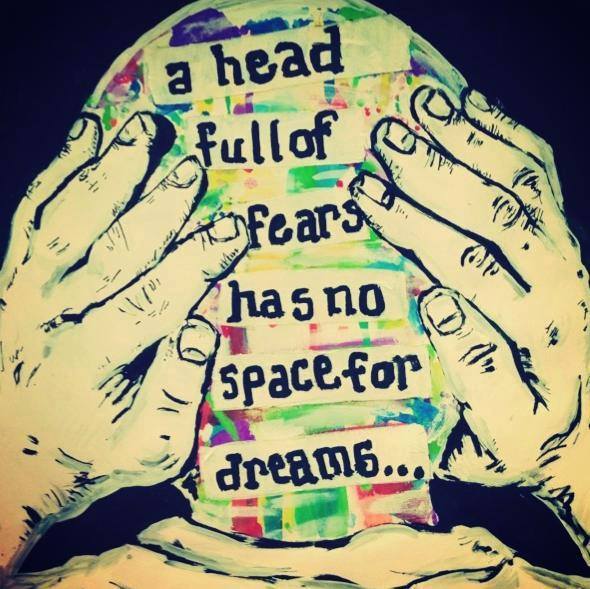
Coping During Difficult Times With Mental Illness

          We all have difficult times when it seems the breaks are beating us and absolutely nothing is going our way.  Sometimes things seem bad enough that no matter what we do, things just get worse.  This is true for even the most sane of people.  Yet this is even tougher for those of us who are mentally ill.  We can become agitated and disoriented even on average days.  On days when things are going especially bad, the situations that arise can become almost too heavy of a burden to bear.

            This is where finding the strength to continue on comes in.  Strength to fight the good fight can come from several different sources.  A source of strength for a mentally ill person can come from a support person.  A support person, whether it is a family member, a friend, a doctor, a counselor, or anyone to hold us accountable can help anyone cope with difficulties.

            Everyone needs friends and family to lean on during tough times.  Human beings are not meant to be alone and isolated.  This is true especially of the mentally ill.  We who are mentally ill need to have support systems in place for when things go wrong.  Believe me, they will go wrong.

            The support system can comfort you, calm your fears, and let you know that these difficult times will not last.  Those of us who have weathered the storms of mental illness and come out stronger because of them are in turn better able to help those who are just starting out.  It is easy to bemoan that we are different or can’t do what we used to.  But that won’t make it any easier for us.  And it certainly won’t make us more able to weather the next round of storms or help someone else in need.  It sometimes takes an honest and loving support person to remind us of this during our times of distress.

            Do not give up.  Giving up is not an option.  Strength can come from many sources, even from within.  Strength to continue on will sometimes be the only thing that carries you through one moment to the next.

Coping With Losing Friends During Mental Illness


            When I was in high school I began having problems with what was the beginnings of my mental illness.  I began to act very strange and unusual.  I had developed a very volatile temper because of my mental illness.  Before I became ill I was very easy going and I didn’t get upset very easily.  In grade school I was even one of the class clowns.  All of that changed when my mental illness came into being.

            I would get very angry over anything and everything.  The most meaningless snide comments from a classmate would often be enough to make me very angry.  It also came to be that I hated many of my classmates because I believed that they were out to harm me.  This was, as I learned in retrospect, due to the paranoid aspect of my schizophrenia.  I would often be very defensive and standoffish.  I would rarely open up to anyone with the exception of my best friend.  I never got into any fights in high school but I came close several times.

            Since I was building up walls around myself and not opening up to anyone, my friends gradually disappeared.  I didn’t notice this at first.  It wasn’t until I was almost half way through my senior year of high school I realized that all of my friends were gone.  Looking back I know that was because I had become standoffish, distant, bizarre, paranoid, and very angry.  All of this was occurring for no outside apparent reason, but within my brain I was undergoing massive upheavals.

            I know now that my parents knew that something was severely bothering me.  Yet since I was so paranoid I kept my issues to myself.  This didn’t help at all.  It made things much worse to have to put up a false front and have a developing mental illness at the same time.  I was terrified of what would happen if I let my parents know what was really going on inside of my mind.  It was terrifying enough for me to experience it and not know what was going to happen from one moment to the next.  I had no idea how to tell them I wasn’t all right at all. 

    How do you tell someone what is wrong with you when even you don’t know what’s developing?  We know all about the symptoms of heart problems and cancer.  We have those hammered into our heads by the press and popular culture all of the time.  Yet the public at large is still quite ignorant of the symptoms of mental illness and mental health problems.  I didn’t even know what I was going through had a name or that I wasn’t alone when I first became ill in the late 1990s.  The Internet was still in its infancy and information on mental health and mental illness issues was not very easy to find.  I had no idea what was going on inside my head.  My paranoid aspects of my illness made me reaching out for help from other people almost impossible.

I certainly didn’t seek the help of my school counselor.  I was fearful that talking to the school counselor would be ineffective.  I had my head full of visions of counselors asking questions about my childhood and making me tell them what I saw in large inkblots.  I was also scared of getting labeled because I went to a very small high school with less than one hundred students in the entire high school.  I was paranoid enough that I didn’t want my problems becoming public knowledge.  High school kids are notorious enough for being gossips and cruel.  I just knew, in my paranoid state, that my classmates were already talking behind my back.  I just knew that going to the school counselor would have made things much worse.

Since my classmates knew I didn’t drink alcohol or do drugs they had to know that something was really messed up with me.   It’s easy to dismiss someone’s erratic behavior because of drinking or drugs.  But because of the lack of public knowledge and discourse about mental illness, the possibility that someone’s odd actions may be due to an undiagnosed mental illness will almost never occur to someone.  So looking back on my high school days, I can see why my classmates were alienated from me.  It wasn’t because of anything malicious; it was because they had no idea of how to work with a classmate with an undiagnosed mental illness.  I have to attribute that to a lack of knowledge and public discussion about mental illness.

Fortunately I made several friends in college who accepted me in spite of my mental illness.  By then I was being treated and the treatments were quite effective.  Thanks to the Internet and social media like Facebook.com, I have kept in contact with many of my college friends.  I am also now reestablishing contact with my friends from high school that had become alienated because of the onset of my paranoid schizophrenia.

I have had a few friends tell me that because of me they have been able to better understand those with mental illnesses.  I have also been told that simply because of being friends with me they have gotten past many of the stigmas and prejudices that are associated with mental illness.  I’m glad that there have been some positives to come from my mental illness.

Struggles With Mental Illness In College

Struggles With Mental Illness In College

By Zach Foster


            I wasn’t officially diagnosed with paranoid schizophrenia until I was twenty years old.  Yet I started to notice problems when I was seventeen years old.  I was gradually seeing changes in my personality as well as losing interest in my activities and hobbies.  None of this made any sense to me when I was going through it and was quite scary.

            Until I began having problems I was involved in many of the activities my small town high school had to offer.  I was also one the best and smartest students in my class.  I even had an active social life outside of my school activities.  In short, I was a typical teenage male.

            Shortly after I turned seventeen, I began to notice some changes in myself during the fall of my junior year.  I started to become careless in my school activities and eventually became indifferent about them.  I would occasionally skip speech practices.  I would be giving minimum effort in football and track practice as well as arguing with my teammates and ignoring my coaches.  I came to be easily frustrated and angered by my schoolmates.  Things I would have previously dismissed as meaningless jokes and harmless pranks took on a sinister and threatening tone.  I was less interested in school and my grades began to decline. 

I didn’t even try out for the school-play my senior year even though I had the lead role as a junior.  Though I never did cross that line, on many occasion I wanted to physically fight my classmates and even some of my teachers were previously I hadn’t been in a fight with anyone except my brother and my cousins.  I completely gave up on dating as I went my entire senior year without one single date.  I began to gain weight at a fast rate once football ended my senior year, gaining almost thirty pounds in only six months.  I even managed to fail a class the last quarter of my senior year.

            By the time I graduated from high school I lost contact with all of my friends.  I didn’t have a single friend when I finished school because I had neglected to maintain any friendships and strained others as hard as I did.  I was angry and frustrated all the time.  I almost never laughed or smiled.  I never went out socially anymore, instead opting to hide out in my basement bedroom and listen to hard rock music for hours at a time.  Fortunately I was still able to graduate because I had enough credits even with failing a class.  I didn’t care about anyone or anything, especially myself.  My hygiene declined, as did my self-esteem.  I didn’t trust anyone at all, not my teachers, my parents, my old friends, and especially not my classmates.

            I was a total wreck by the time I graduated from high school.  Graduation was not a celebration as far as I was concerned.  I didn’t savor the victory of graduating because, in my diseased mind, I was expected to graduate just as much as I was expected to do my chores at home.  Graduation had no more excitement for me than taking the trash to the curb.  I didn’t see graduating as an accomplishment. I saw it as I survived those last two years of pure torment. 

            Looking back on it years later, I should have sought help immediately when I was in high school.  I certainly should never have attempted college immediately after I finished school.  Mentally I was exhausted and running on fumes.  I could hardly concentrate on my work even that last year in high school.  Socially I was inept and way behind the curve.  I should have sought help sooner than I did.

            My problems went from bad to horrible when I got into college.  I was depressed and sad when I wasn’t full of rage and anger, but never happy about anything.  One moment I would be absolutely enraged by something that was meaningless.  Not even a minute later I would be so depressed and sad over something else that I was inconsolable.  After a few weeks of this in college, I went to a counselor who strongly recommended I go see a psychiatrist, which I finally did after about a year of fighting and struggling through school while having major psychological issues.  I was finally diagnosed with paranoid schizophrenia in October 2000.

            After being diagnosed with paranoid schizophrenia I was put on a series of anti-depressants and anti-psych medications.  It took several months of trial and error before a combination of medications that worked for me was found.  With this right combination of meds I was once again able to return to college and live an almost normal life.

            I first had problems with being depressed and moody when I was a junior in high school.  At first I thought nothing of it and believed I was merely going through typical teenage mood swings.  I saw what other students in my high school were going through and came to believe that anger, depression, frustration, sadness, and anxiety were normal parts of growing up.  I would find out that my original thinking was wrong and distorted.  My problems were anything but normal and I was going to need some serious help.

            As I moved from high school into college my problems went from bad to worse.    I was rarely happy with anyone or anything.  I easily lost my temper over the smallest things.  I had delusions that people were going through my trash.  I was paranoid that people were listening in on my phone conversations.  Yet I still managed to stay in school.

            I first went to counseling a few weeks into my freshman year.  Before then I was completely on my own.  I was keeping all of my emotions and fears bottled up with no way to safely release them.  I was fearful of telling anyone the true way I felt and what I was really thinking.  I was afraid that no one would understand me and or tell me to ‘suck it up and take it like a man.’  I had been doing just exactly that since high school and I was only getting worse by the day.

            Counseling did some good to help me vent my frustrations.  But it did nothing to get at the root of my problems.  I was still having problems with depression, anxiety, delusions, auditory hallucinations, anger, and extreme irritation.

            My auditory hallucinations were a problem.  Mine didn’t tell me to kill myself or to hurt anyone.  Instead mine always give a running commentary of what I was doing all of the time.  It was sort of like the play-by-play commentary on a ballgame telecast except that it was my life.  The voices were always inside of my head, never outside.  The voices were never complimentary; they were always very critical, occasionally hostile, always annoying, and always occurring at the very worst possible times.  These voices demanded perfection out of everything I did all of the time. 

            Finally in the summer of 2000, I went to see my family practitioner about my depression and anger issues.  I was way too embarrassed to talk about my auditory hallucinations.  Major mistake.  I could have saved myself a great deal of heartache and a lot of recovery time had I pointed those hallucinations out immediately.  But because I was not completely open with my doctor about all of my problems, I wasn’t correctly treated right away.

            I was given a prescription for an anti-depressant that was quite new and popular.  But it didn’t do anything to lessen my problems.  I was well back into college before I figured out that the medication was going to have to be changed.  That was my second major mistake, trying to continue on with my life before I took care of my own sickness. 

            With my illness getting severe enough that every aspect of my life was now suffering real bad, I had no choice but to take a few days off from school.  I went and saw a psychiatrist.  After a several hour session and a complete physical where I was completely honest, I was diagnosed with Major Depression.  Paranoid Schizophrenia would later be added to the diagnosis. 

            Different people handle being diagnosed differently.  Some will be confused as to what it means.  Others will be severely depressed, saddened, and feel that life no longer has any reason for going forward.  Others, like myself, may actually be somewhat relieved to know that there are names for their problems and that they are not alone. 

            I went through several series of medications over the next several months with little success of finding anything that worked well.  The entire time I was trying to find a series of medications that worked I was limping through school, just barely getting by.  At first I thought that quitting school was not an option because I had never quit at anything before in my entire life.  It finally got to be too much and I finally came to the conclusion that I needed to take some time off and regroup. 

            In March 2001 I decided to withdraw from college and take a few months to recover.  My mental illness, juggling medication changes, and trying to pass my classes had finally worn me out.  I would have flunked out had I stayed on for the rest of the year.

            In the weeks that followed my withdrawing from school, my psychiatrist and I were able to find a combination of medications that finally worked.  By the summer time I was able to hold a forty-hour a week summer job.  When the fall of 2001 came I re-enrolled in college and was back ready to go.


I was officially diagnosed as mentally ill in the year 2000 at the age of twenty.  Before then I was acting strange and thinking paranoid thoughts that no one else was.  I had no idea just how bizarre my thoughts and actions were until I was recommended to a psychiatrist by both my family physician and counselor.

            I now readily admit that I had serious problems in college before I started my treatment.  I was doing well in my classes but my academic achievements were the only things going well for me in my first year of college.  I didn’t make many friends and I didn’t date at all.  I didn’t join many social activities.  I was too paranoid that people knew my thoughts, my secrets, and everything else there was to know about me.  I felt like I could be completely seen though, like everyone knew me better than even I knew myself.           

Yet that wasn’t the end of my troubles.  I was also paranoid that people were intentionally going out of their way to keep me in the dark of what was going on at college.  I was usually the last one to learn the goings on in other peoples’ lives.  I was usually the last to learn of any campus news.  So I was angry that people “intentionally” kept me know knowing about what was going on in my dorm, on campus, and even with my friends and roommate.

            Before I began my treatments, I would go through cycles where I would sleep for only two hours a night for a week at a time.  By my second year of college, I was such a wreck that I couldn’t concentrate enough to read a book, listen to a class lecture and take good notes at the same time, or even follow an average conversation.  Once my second year of college was underway, I didn’t have even my academic work to be proud of.  My grades were suffering severely.

            By the time Christmas of 2000 came I was a mess.  I was changing medications every two to four weeks while we were looking for something just to remotely work.  I eventually came to where I would get out of bed for classes and to go to the mess hall to eat twice a day.  That was it.  The rest of my days were spent in bed.  I don’t know what I was thinking to believe I could still attempt to stay in school while being that sick and having that ineffective of treatments.  But that is part of the delusional thinking that comes with mental illness.

            Naturally my social life died a quick death.  The friends I made my freshman year quit coming around and I quit going to see them.  I was no longer participating in any school activities so I no longer had those friends.  I lost my study groups when I quit going to those.  I lost my girlfriend when my behavior became especially bizarre.  I had only two friends by late February 2001 and that was it.

            I finally decided to withdraw from school on March 2, 2001.  The reason I remember that exact date is because that is when I believe that my recovery officially began.  I dropped all of my classes, moved back home with mom and dad, changed my medications again, and caught up on my sleep.  The medication changes finally worked this time after several months of stumbling around in the dark.  After six weeks of being out of college I was feeling well enough that I began working 40 hours per week at a retail job.  By the middle of summer I was feeling well enough that I decided to re-enroll in college.

            After I returned to college I made it a point to be friendly and thoughtful to everyone I came into contact with regardless of how they treated me.  But I decided to keep only a few really close friends that I felt I could tell anything.  Since I was being friendly to everyone that I met, that made it a little easier for me to learn how to trust people again. Little by little I began to open up to more people until I felt that I could carry on a regular, casual conversation with anyone who willing to carry on one with me.

            From being friendly with even strangers and gradually opening myself up more and more I learned that my paranoia about people trying to hurt me was completely wrong.  In fact I found that most people were just as busy with their own lives as I was with my own.  They were too busy to hurt anyone.

             Just because I was under treatment didn’t mean my problems were over.  During the last three years of my collegiate career, I never achieved the quality of grades I had during my first year of college.  I also changed over to a different major.  I originally started college as a pre-pharmacy student.  After a year and a half of struggling with my mental illness as well as my classes, my grades were bad enough that I wasn’t going to pharmacy school.  I needed a change.

            I switched to a business management major, which was a surprise to my family.  I had never taken any business classes in high school.  I didn’t have much of an aptitude for sales, and I was quite an introvert.  To my family and friends the move didn’t make much sense.  But to me it made a great deal of sense.

            In my line of thinking at the time, I wanted to be employable with a good job as soon as I graduated from college.  Even though I was really passionate about literature and history, I always figured I could read all the history books and classics of literature on my own time when I wasn’t studying for my business classes.  With my best friend, Matt Campbell, being a history education student helping me out with history and classical literature books, this is exactly what I did.

            I admit with this “Dual Study Program” with my studying business classes officially by day and reading my classical literature and history books late at night and on the weekends, I didn’t have much time for outside socialization.  I had my small core group of friends.  Yet I also made it a point to be friendly as possible to as many fellow students as possible.

            As the last three years of college went on I slowly picked up a few more friends and gradually went to more social activities.  There were a few music bands on campus that occasionally played weekend concerts that I went to.  They were pretty much cover bands that also played some of their own material.   I made a few friends with some of the band members through that.

            I also made a few friends through some of my business clubs like Students In Free Enterprise.  I also went to many of my college’s home baseball and basketball games.  I preferred the baseball games because of the more laid-back atmosphere of baseball and I had a few friends on the team.  I also made a few friends through games of softball, ultimate Frisbee, and flag football.  I wasn’t a fast runner but could be a vicious blocker.

            I bring all of this up to show that I was able to have the average college experience in spite of having a mental illness.  There were a few things I obviously couldn’t do, namely the drinking scene because of my medications.  I wasn’t in college to drink and drug.  I was there to get a degree.

            I didn’t work during the school year because of the stress of going to school full time, having a mental illness, and having a job would have just been too much for me.  So I worked in the summers instead.  It also helped that I had a good academic scholarship based on my grades.  Even though I wasn’t getting straight A’s, I was still managing to do well.  I was enjoying the college experience at the same time. 

            A strange thing happened during my last year of college, I became interested in writing.  I had been reading voraciously the previously two years, so I suppose that writing would only be the next logical step.

            All of the struggles, problems, victories, and defeats of five years of college came to a culmination on May 8, 2004.  That was the day I graduated from college.  Graduating from college meant that I had overcome the problems of mental illness and accomplished my life long goal of finishing college.

            While it’s been several years and I still haven’t found permanent employment in my major, I still won because I was able to finish college. Finishing college by itself is hard enough.  Throwing a mental illness in the mix makes the degree of difficulty pretty steep.  I hope that by finishing college that perhaps someday I can encourage someone with a mental illness to reach for and achieve their dreams.