Mental Illness and Friendships

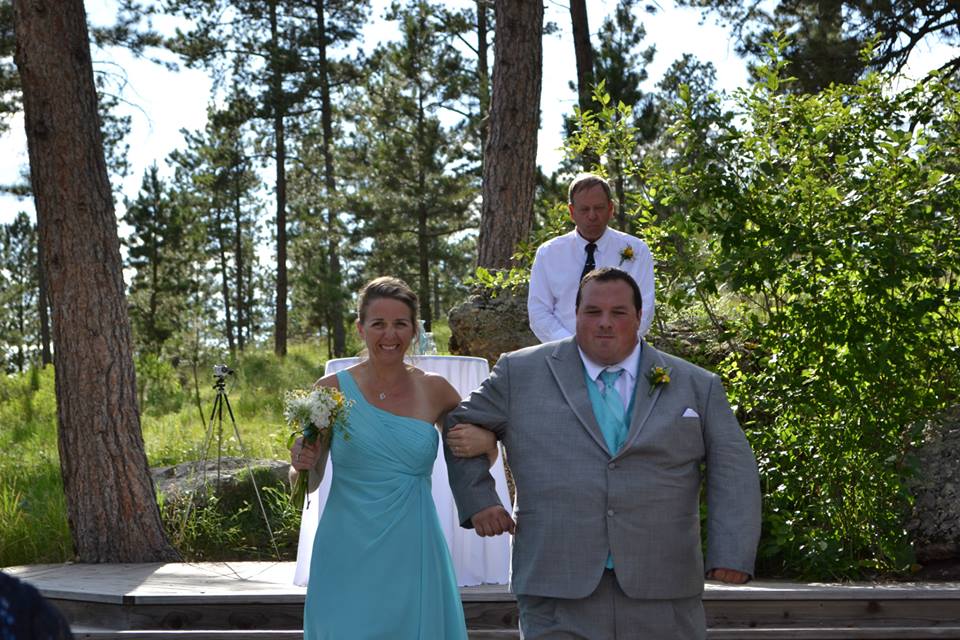
Earlier this week I had one of my best friends from college spend a few days at my apartment.  We went out to eat at a couple of places I had been meaning to try.  We went to Omaha to catch a minor league baseball game, which is a fun way to spend an evening and can be done for less than $25 a person pretty easily.  We had front row seats on the first base line and the seats cost only $13.  I took him to one of the parks I go for walks in and crowd watch.  We also chatted extensively about topics near and dear to us, topics like economics, future tech possibilities, history, our fantasy league baseball teams, dating experiences, etc.  I’m going to see him again in July when I go to the Black Hills of South Dakota as I’m one of the groomsmen in his wedding.  I got remeasured for a suit and, even though the weight loss has slowed for the last couple months, I am actually down a few inches in most of my measurements.  Go figure.

For the few days he was here, I had no problems with the mental illness flaring up.  While I am quite steady most of the time anymore, I still have moments of weakness when the problems come creeping back.  I haven’t completely mastered warding off these flare ups, but have learned not to act on these negative emotions and thoughts.  Even when I have the flare ups, I’ll usually just rant and rave but not actually act out physically.  And my family, to their credit, put up with it and don’t try to argue with me when this occurs.  By now we’ve figured out the best way to get out of a down ward spiral is to often allow me to just burn myself out by ranting for awhile as long as I don’t physically threaten anyone or myself.  The odd thing about having schizophrenia is when I am having these psychotic breakdowns is I am completely aware of what is going on and what I am saying but the impulse controls are not working nearly as well.  Fortunately for all of us involved my bark is far worse than my bite.  And to their credit, my family and friends endure my problems and quirks like champs.  That is why it is important to keep in contact with friends and at least attempt to keep things civil with family members.  They can help smooth things out when things go bad.  They also make living far more interesting.  The most important thing in life is our friendships and relationships with other humans.

Worry and Stress

ftchagrin-11-23-13_zpsb5feb807

Worry and stress hinder the mentally ill and the neurotypical alike.  No one can escape it.  It served us as a species well for most of our history when hunter gatherers needed successful hunts and fight other bands.  Otherwise they would die.  Worry and stress are natural to us.  It allowed humans to go from barely surviving to modern civilization.

Yet our natural inclinations to worry are deteriorating our quality of life.  The old fight or flight mentality isn’t serving us as well.  We are seeing more people going through depression, panic attacks, anxiety problems, and physical health problems brought on by mental stress.  We haven’t yet developed the ability to mentally let go of worry.  This skill is not natural to us.  It has to be learned.

Learning how to let go of stress and worry, even with years of practice, won’t be perfect.  I have been taking steps to lessen my worry for several years and I occasionally slip into old habits.  Things I have found helpful include keeping journals, engaging with negative people as little as possible, venting slightly on occasion, and never watching news broadcasts.

When I keep journals, I don’t hold back. I write my frustrations, my anxieties, my annoyances, my fears, and the delusional thoughts that sometimes accompany my mental illness.  I get it out of my mind and onto paper.  But I don’t share these with anyone.  It does me much better to vent on paper rather than hold these worries in and drop them on someone else all at once.  Many of our problems with stress, I am convinced, come from the idea that we aren’t allowed to vent or have to put up a good front at all times.  I can’t change how anyone expects to act in public.  What I can do is vent in the form of pen and paper, get it out of my mind, and then move on.  Once the notebook is full, I throw it away.  Been doing this for at least two years.  It helps.  Sure I occasionally have problems and just dump my frustrations on family members.  But that’s the nature of the beast of mental illness and I do my best to minimize those blow ups.

I vent to my friends and family as needed to.  I used to be one of these people pleasers who listened to and try to solve everyone’s problems.  But I wouldn’t tell my problems to anyone.  It made me resentful and feel like I was being used.  I can’t remember when it was but during a conversation with someone I finally said, “I’ve heard enough of your problems.  Now you’re going to hear about mine.”  Fortunately for this relationship I wasn’t malicious about it.  But being resentful of listening to others problems while I didn’t stand up enough to have others listen to mine cost me at least a couple friendships.  My friends have problems.  I have problems.  We are now more balanced in talking about our issues.  I don’t just do all the giving while not taking some of my own anymore.

I don’t watch any of the 24 hour news broadcasts.  Haven’t for a few years.  Why should I?  I already know there is a lot of trouble and mess out there.  Always has been.  Always will be.  I have no need or desire to know every little bit of trouble going on, whether it’s halfway around the world or halfway across my country.  Seriously, why give myself more stress and anxiety then I already have?  I can’t solve all the world’s problems.  I’m not that good.  Anyone who has any kind of awareness knows that there are serious messes in the world around them.  Just because the world is messed up doesn’t mean I have to be.  Since I learned to let go of things I didn’t personally cause and can’t prevent, my life has had fewer worries and fewer stresses.

A Letter To My 18 Year Old Self

10003113_10152340093435460_650990473_n

High school graduation season is in full swing in my home state.  Some times it’s tough to believe I’ve been out of high school for sixteen years.  So much has happened since I became an adult.  What follows is what I would tell myself if I had a time traveling DeLorean or funky booth like Dr. Who.

Dear Zach

You have just finished high school and your adult life now lays ahead of you shooting off into the unseen distance like the open highway in Jack Kerouac’s “On The Road.”  You didn’t take any time to appreciate the fact you graduated from high school, looking ahead to the challenges and opportunities of college instead.  You should have appreciated your time being somewhat of an outsider in your high school.  First because the people that struggle socially in high school often are the ones who adapt to the adult world better.  Be happy the highlight of your life wasn’t your last football game or Senior Prom.  You will face far tougher issues than losing the big game. You will have greater thrills than wearing an ill fitting rented suit and dancing among tinsel and paper miche decorations in a basketball gym.  Things like that will be remembered by NO ONE.

The challenges you will face in the coming years will be great and many.  When these challenges and disappointments come, you will be thankful for having developed a strong mind and ability to handle adversity, loss, loneliness and pain.  Because you didn’t have legions of fair weather friends, you will appreciate true friends and confidants.  Because you know what it’s like to be treated poorly, you will have compassion for others.  Because you didn’t allow yourself to concentrate on only academics or football or speech or your weekend retail job, you have made yourself a well rounded and well versed man.  Being well rounded won’t help you in a corporate job, but it will make you more self reliant and more aware of what’s going on around you.  It will make you interesting too.

I see you have your high school annuals.  You’ll be happy you kept them even if you go entire years without looking at them.  In coming years you will be amazed at how much you were involved, how much you accomplished, and how well prepared for college and the ‘fast times and hard knocks’ of the first several years of life in the real world.  Be happy you acted in the school play for two years, you won’t have that back.  Be happy you did three years of competitive speech, you developed courage and an ability to improvise, make split second decisions, and hide your fear from the outside world.  Be happy you played football for three years, even though you were at odds with your teammates. Not many people can say they did athletics in high school.  Millions may watch football from the stands in towns all over America on fall Friday nights, but you were part of the action.  It’s the closest you’ll ever get to feeling like a rock star or Roman gladiator.

Take joy in the fact you went to a small high school.  You may not have had dozens of Advanced Placement classes or a program for gifted students, but it will drive you to read and study on your own.  Be grateful you were unable to disappear in the crowd when you were harassed and annoyed by other students, it forced you to face your fear because you couldn’t run away.  Things like that develop courage and fortitude, running away from your problems or hiding in a clique won’t.  Be happy you couldn’t spend your days reading comic books or playing D&D.  Later on you’ll have friends whose only out of school activities were just that.  While they are good guys, be happy you had to rely on your own imagination to develop your own stories and got to draw upon real people and real experiences to find inspiration.  That, and most girls don’t find D&D and comic books fantasies very sexy.

Speaking of girls, don’t believe the nonsense you’ll date, party, and sleep around several nights a week in college.  “Animal House” has nothing to do with real college.  John Belusi won’t be your roommate.  You can go hang out, get a little crazy, etc. at times.  But you’ll be far ahead of 80 percent of your classmates when you keep things like that in moderation.  The few who do nothing but study won’t have the friends or the experiences.  You will be shot down and have girls stand you up even more in college than in high school.  You will have bad breakups, you will have terrible dates with girls, you will be frustrated, and you will have heartaches.  You will also realize that there are worse things than not having a girl in your life.  When you see high school and college classmates go through divorces and unhappy marriages, you might even be grateful for loneliness.

As far as your classes go, don’t get tough on yourself for not making Dean’s List or not graduating with honors.  Most people that get those honors studied easier subjects than Pre-Med or Business Management.  Spoiler alert, Zach, you won’t get the dream job you gunned for all the way through high school.  You will experience pains and horrors that make Dante’s “Inferno” look like an Adam Sandler comedy.  I won’t go into details because you won’t believe such things could happen to someone who worked as hard and was as ethical as you.  Just believe me when I say bad things happen to even good people.  That and no employer will ask to see your college diploma.

Zach, be grateful for the challenges ahead. They will teach you that you don’t need a prestigious job or lots of money to live a happy and content life.  You will learn the best things in life are other people and your experiences.  Be happy you went to the small college you did.  You got to make friends from all over America and the world.  Most people that go to large, prestigious universities don’t get to have the variety of friends you will.  Be happy when you get to learn early on that life isn’t about working most of your waking moments at a mind numbing job, chasing money to buy junk you don’t need to impress people who don’t care.  All I will tell you is every day you wake up, be thankful if aren’t a cubicle jockey or a serf in a designer suit racking up debts on meaningless trinkets and thrills.

In closing, Zach, always remember the words of the late Bill Hicks: “It’s just a ride.  And you can change it anytime you want.”  Be happy that you can and will.

Yours truly,

Your older self.

Being The Proverbial Black Sheep As A Kid

whybenormal

Even before I became mentally ill, I had problems with fitting in with others and making friends.  It has caused me so many problems with others over the years.  When I was a child in grade school, I got in so much trouble with teachers, classmates, and family alike whenever I said anything sounding like it had no earthly reason to come from the mouth of a child.  For example, as a seven year old if I joked about how slow someone was speaking, I would try to make a joke because I saw that children and adults enjoyed humor, and say something like “Speak any slower and we could time you with a sun dial,” I would find myself in major trouble.  I was told I had “attitude problems” among other things.  Yet I would see adults joke with each other with similar humor, and worse. I couldn’t figure it out.  I was often told by adults to “grow up” and yet when I tried to act, joke, and talk like the adults I saw I got in trouble.

Even as I child I valued my freedom and privacy.  I would often go into the large backyard of my home and pace and think for hours on end.  I often did this to dream up stories, dream up new twists on old games, make up new slants on old children’s stories, and think of ways to do things better.  My classmates would ridicule me for wanting to be alone all the time and I probably concerned my parents for not wanting to socialize more with family and classmates.  I didn’t do it to be anti-social or draw attention.  I just got a lot more mileage out of socializing for short times than most people.  I didn’t do it for attention because I really didn’t want attention once I became old enough to figure out I was a running joke because I was smart and actually enjoying learning how to do new things.  I might not have spent so much time outside if I had a chemistry set.  I’d probably accidentally burned down the house instead.

My real saving grace as a kid was having two friends just as smart and eccentric as I.  My first true friend, a kid named Ben who moved to my town when we were 11, was as interested in music, dry humor, and history as I was in science.  We would often do inexpensive science experiments in the storage room of his parents’ grocery store.  One time we took some old Micro Machine cars, taped magnets to the bottom of the cars, weighted the top of the cars with pennies and dimes, and got them to run along a track of magnets at least three feet long.  We didn’t realize that we made a very crude version of Mag Lev transportation.  Ben and I also joked that we would eat nothing but meat, cheese, and milk for a month to “protest the wholesale slaughter of defenseless plants.”  Yeah, the Atkins Diet as designed by 12 year olds.  Needless to say our sixth grade classmates didn’t get the humor.

I never did enjoy the toilet and locker room style of humor that my classmates did.  Even in high school, I really liked the comedy of people ranging from George Carlin to Jeff Foxworthy to Bill Hicks.  While most of my classmates were listening to Garth Brooks, Faith Hill, and George Strait, my two core friends and I were listening to groups like Metallica, AC/DC, and the Seattle grunge groups that were around in the 90s (much to the chagrin of my parents).

We didn’t win many style points with our classmates because we were contrarian thinkers, often asked questions in class, didn’t just ‘go along to get along’, openly questioned policies and practices of adults that were counter productive and senseless, and we didn’t particularly like sports.

bbd97585

I was often chided for preferring to spend my weekends and summer days reading books, namely non fiction.  To me, the things that occurred naturally in the world and universe was far more interesting than fairy tales and fantasy books.  To this day I have never read anything by J.R.R. Tolkien, C.S. Lewis, and J.K Rowling.  Reading books about science, biology, astronomy, chemistry, military history, etc. were interesting enough without the magical Disney nonsense.

I also didn’t do well dating as a kid.  My other quirky best friend, a girl named Shaunna, and I would often hang out on weekends watching Mystery Science Theatre 3000 on SyFy channel if there weren’t any high school dances nearby.  It wasn’t until the last five years did it dawn on me that the reason I did so poor in the numbers of girls I dated was precisely because of my best friend that was a girl.  I was probably shot down by most other girls because they thought I was a player or swinger.  But as a clueless seventeen year old that thought never once entered my mind.  If only I knew then even half of what I know now.

One thing I do know now is that normal is boring.  Normal is mundane.  Normal does not change the world or even a neighborhood for the better.  Far too many people over the centuries have died fulfilling only a fraction of their potential because they feared being abnormal.  I never had, I still don’t, have a fear of standing out and going against the tide of acceptable public opinion.  As far as I can tell, my old friends Ben and Shaunna are still the same way.   Sure it is frustrating to prove a point and still not sway normal people.  But I don’t want to lose the intelligence, empathy, and creativity that were the tools God gave me to try to make my small mark in my corner of existence.  It causes me frustration but it doesn’t cause me fear.  I got over that a very long time ago.  My older brother, being the typical tormenting brother who’d try to whip his younger sibling back into line, would often ask me things like ‘Why can’t you be normal?’  My answer, years later, is something like ‘I tried being normal once but didn’t like it.’  😀

tridebeingnormaldintwork

Seeing Old Friends

10294454_4277668317238_353607190635132529_n

I haven’t written for two weeks because I spent almost a week in my childhood hometown. I spent that time visiting old friends from my high school years.  One of these friends in particular, the best friend I have ever had, I hadn’t seen since we were eighteen.  We kept in contact through Facebook and emails, but none of that is the same as seeing a friend in person.  I was pleasantly surprised that she and I were able to pick up as if it was only a few days since we last talked, let alone sixteen years.  I was actually quite speechless when we first met last week simply from being overjoyed at seeing this friend who stuck by me through the highs and lows of mental illness.  Years ago in high school, when I was having my first problems with crippling depression and bouts of anger, she was the first one to suggest that what I was going through was not normal teenage angst.  She observed this before even I did.  Good friends like this need to be held onto.  It’s not like good friendships can be found every day.

This visit with old friends reminded me of how valuable having some people who will support me, and I support them, truly is.  In my current life, I don’t always have a healthy social life.  Much of this is due to the paranoia aspect of my mental illness that makes it tough for me to tell whom is trustworthy.  Since my default mode is to assume I cannot trust someone I just met until I can tell otherwise, this makes starting new friendships and social contacts pretty tough.  Social safety nets are not only essential for any kind of stability for those with mental illness, but they make life much more enjoyable.  They are the pleasant memories of when things are going well that can make the difference in getting through tough times that come and go for all people, mental illness or no.  To paraphrase the late Robin Williams from ‘Dead Poets Society’ (one of my favorite all time movies), ‘Now medicine, business, engineering, science are all good endeavors that are necessary to sustain life.  But it is things like art, poetry, beauty, love, friendship that are reasons we stay alive.’

Thoughts on the Death of a Close Friend

I’m going off my usual mental illness topics for this post.  Something like what I’m currently writing has been weighing on me for quite some time.  Yet it finally crystalized into actual thoughts within the last twenty four hours before this writing with the death of one of my best friends.  This man died in his early 80s and was a retired Lutheran minister.  Pastor Vern, as this man was known to everyone living in my apartment complex, was probably the wisest, wittiest, well read, and compassionate individual I met in my entire life. I knew him for eight years but I don’t believe I ever heard him say anything derogative or hurtful about anyone.  I know I can’t go even eight days without at least thinking something hurtful directed at others, but hopefully most of this is due to the aspects of my illness.

Being a career Lutheran minister, Pastor Vern no doubt had his views on religion and God.   Yet he was not as caught up in rituals, creeds, and beliefs when talking with me as he was on the basic principles of Christianity and other religious beliefs.  Those core beliefs, the ones he lived by everyday were simply 1) Love God, 2) Care About Others, and 3) Respect Yourself.  I suppose if one were to substitute or supplement  the world ‘God’ with nature or the earth, even the most convinced atheists would be hard pressed to deny that loving nature, caring about others, and respecting yourself are good principles to attempt to live by.

Pastor Vern, being one with a wide array of interests and knowledge, was a perfect friend for someone like myself.  He and I could easily talk about history, classical literature, philosophy, among numerous other topics for quite a long time.  We would usually be sitting outside, him smoking his pipe, and just discuss whatever happened to come up regardless of whether it had any logical order or direction or not.  Some of our neighbors who listened to our conversations no doubt thought us a little odd for rarely discussing such mundane things as weather, current events, or gossiping about others.  For myself and Pastor Vern, hardly any topic was not subject matter to be discussed.  We had an unspoken agreement that no matter how much we disagreed on any one topic, we would never become angry or speak harshly to each other.  I suppose this falls under the care about others and respect yourself principles.

He and I have both studied the basic teachings and principles of most religions with significant followings.  We both came to the conclusion that in spite of the differing rituals, social practices and customs, sets of creeds and beliefs, etc. that one thing they all believed were the ideas that a person would be better off in their own lives and dealings with others if the basics of ‘Loving God (or your creator/giver of life/etc.)’, ‘Caring About Other People and Living Things’, and ‘Respecting Yourself’ were principles that a person attempted to live by.

Yes, these are simple principles to the point that any six year old child can grasp these are important.  Sadly, most of us as adults severely complicate these and often don’t live by these ideas at all.  How much less strife and division would we have in our work places and places of business if managers, workers, and customers alike lived by even the caring about others and respecting ourselves?  How much less war, famine, disease, poverty would we have if even individuals, let alone the governments of the world, operated with these guides?  How much less needless destruction of our most valuable forests, farmlands, waters and wasting of finite natural resources would we have if we lived by even the ‘Love God/Nature/Earth’ idea?  How much less conflict and needless grief would we have in our personal lives if we cared about others and respected ourselves more?

I apologize for the mini rant in the previous paragraph.  I wrote that to try to apply to our own lives the principles that my recently deceased friend Pastor Vern lived by every day.  These are principles I attempt to live by though often inconsistently.  In closing I’m glad to have had a friend like Pastor Vern for the eight years I knew him.  I wish that everyone could attempt to live by such principles, or at least become acquainted with those who do.

Filling Voids in Day to Day Living

            After I found out the hard way that I was going to not be holding forty hour a week employment, I needed to find a way to fill my days.  I could have been content to just sit in front of the TV for hours on end day after day.  But that type of life isn’t good for anyone.  Let’s face it, it just isn’t.  I decided early on that I needed to find activities that would bring variety to my life.  This would make my time worthwhile and interesting, not just endlessly dragging onto nothingness.

            There are many programs for the mentally ill and physically handicapped who are unable to work.  There are social clubs that engage in different activities everyday.  These activities can give an individual reason to leave the home and give a routine.  These programs vary greatly from town to town and city to city, so be asking around to see what’s available.

            Good source of information on social clubs include mentally ill individuals themselves.  Other sources my include your psych doctor, psych nurse, therapist, family friends, or just anyone in the know.  You won’t find out unless you are willing to ask around.

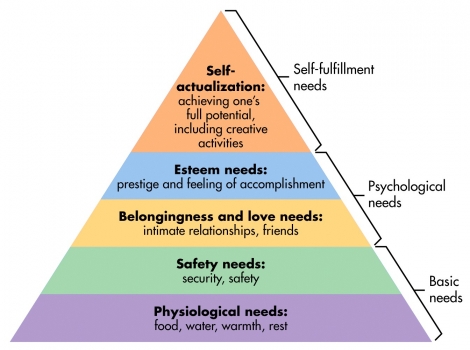
            We the mentally ill have as much need for socializing, appreciation, and belonging as anyone who is considered normal.  Such outlets as church groups, NAMI, and Goodwill are important for those with mental illness issues that make working difficult or impossible.  People are not meant to be isolated for long periods of time as we are social creatures.  Every person has a need to belong to something and identifying with something bigger than just an individual.  Entire sciences such as sociology, psychology, political science, etc. are devoted to learning why people act and socialize the way we do.  Socializing with others is so important to our own humanity that it should never be neglected.

            In America, we are closely identified with our jobs and careers simply because we spend so much time engaged in our employment.  We are now more identified by our employment than by anything else we do in this country. 

            Yet this line of indentifying is a drawback for those of us who are not able to hold long-term employment or hold employment at all due to physical or mental disabilities.  It is even more of a drawback for the mentally whose problems are not are not as obvious as other illnesses.  The line of thinking for many in the mainstream is that if you are not physically disabled or not in a mental hospital, you ought to be able to work full time.  It doesn’t always work out that way.  Mentally ill individuals do not always have physical signs of problems.  Most would never guess who among us is mentally ill if we were seen just once in public.  Yet the mentally ill can have as many problems as the physically ill.

            I cannot stress enough the importance of finding activities to fill the voids in time in your day-to-day life. Life is meant to be exciting and we are meant to interact with other people.  Life is not meant to be spent hiding in your home and living in fear.  For some of us who don’t even like going out in public, a walk to the corner and back can be a start.  Or perhaps you can do your shopping at night or when the crowds are not as large like I do. 

            The important thing is to not take in too much all at once.  You need those small victories before you can go after the big goals and challenges.  Positive and lasting change is a slow process.  But the results are well worth the time and effort.

            I cannot stress enough the importance of having at least one hobby.  Hobbies have been shown to reduce stress and give joy to people.  We have different interests and talents.  There has never been anyone who couldn’t develop a talent for at least one thing that they have a passion for.  Only you can tell what your interests truly are.  If you are not entirely sure about your talents, take some quiet time every day to listen to that “little inner voice” of your heart.  That could be yourself telling you what you are truly interested in. 

            It also doesn’t hurt try out different activities to see what you are interested in.  If you are truly interested in something no one has to push you into such an activity.  Follow your heart and it will lead you to your true interests.

            Another bit of advice is don’t just sit in your home and stare at the TV waiting for life to happen.  Go out and do something with your life.  Interact with other people.  Get in touch with old friends and family members that you have lost touch with.  Even if these activities last for only a few minutes a day, do something with the life that you have.  Gradually build up if you have to.  You don’t have to be successful to start but you do have to start to be successful.

Being Held Accountable While Having A Mental Illness

         This is kind of a tough topic to write about.  I’m going to discuss being held accountable while having a mental illness.  I know that I am walking a very fine line when I say that there were times that I, as a mentally ill person, needed a healthy dose of tough love from my friends and family.  Fortunately, I have friends and family that know me well enough that they know when I’m using my illness as an excuse for when I could be doing better.

         Being mentally ill myself, I completely realize that not all mentally ill individuals would fare well at all under the tough love approach, especially when applied hap hazard.  I am not advocating hap hazard approach to tough love with anyone.  I am saying that there are some of us who can handle such a thing, in the right manner applied at the right time.  It is a fine line to walk and should be applied only when a support person (whether it be family or friends or counselors, etc.) knows the mentally ill individual extremely well and knows when it will work.  It is far from an exact science.  I would go as far as saying it’s like raising children, knowing that some things work with one of your kids but doesn’t work at all with another.

          Fortunately, it is possible to hold someone accountable without resorting to tough love.  Tough love should be used only as a last resort.  But use with caution and always use with healthy doses of love.

         My bouts with schizophrenia and depression made the going in college and the first few years of work extremely rough.  There were times that I just wanted to quit on the idea of being able to work.  But with people like my parents, my friends, my psych doctor, my counselors at college and later when I was working, and my extended family, I had plenty of people holding me accountable.

       Support people are not there just to be a shoulder to cry on.  They are also there to administer a healthy dose of discipline and tough love when necessary.  And there are times when tough love is necessary for even the mentally ill if we are to improve our current situations.  We have to be held accountable like everyone else, sometimes even more so.  I am sure there are many times I didn’t make things easy for my support people at all by my actions and bizarre behavior. 

        Had I not had a counselor to meet with once a week while in college to help keep me grounded and focused, I probably would not have graduated college.  I certainly wouldn’t have done as well in my classes as I did.  And that is simply because I knew I had someone who was going to ride my case if I didn’t do the job in classes. 

       Had my friends and family not encouraged me through occasional tough love, I would not have tried several different jobs before I finally I found a job I could do that I was good at and that didn’t cause me much stress.  I may not have been working my dream job, but I had the discipline to stick to a job for over four years had my friends and family not challenged me to keep looking for work when I was ready to throw in the towel.

       I didn’t like the tough love approach at the time it was being applied.  The thing is, it’s not supposed to be liked; it’s supposed to motivate you to do good things with your life.  Sure I as a mentally ill individual could just mope for the rest of my days about what I have lost?  But what does that gain me? 

        Sure you are mentally ill or may know someone who is mentally ill?  But what are you going to do about it now?  Are you going to learn about the illnesses and try to better yourself?  Or are you just going to drift through life?  The choice is yours.

What Mental Illness Means For Me

I have occasionally been asked to describe what exactly what having a mental illness is like.  Now I don’t get as annoyed with such questions as I used to.  I mean, it is an honest question by people who, for the most part care.  Yet, I am still at a loss to describe my mental illness in a ten to fifteen second sound bite.  I haven’t always been mentally ill, so I can still remember from my childhood and teenage years what it was like not to have to deal with the crippling depression,chronic anxiety, delusions that seem so real (even when I try to convince myself they aren’t), hallucinations that, left unchecked, can be overwhelming by themselves, among other maladies that are associated with paranoid schizoprenia.

The crippling depression can, at times, leave me such that I literally don’t have the motivation to do much of anything.  During the times of depression, I will often alternate between times of intense sadness and intense anger.  I will usually try to isolate myself from physical contact with others during these times.  It’s nothing personal, I just don’t want to have the risk of a confrontation with anyone at these times.  I still can communicate with friends, family, counselors, support people, etc. by means of phone, e-mail, etc. but I don’t risk much personal contact with anyone during these times.  I certainly won’t be driving on the road during such episodes.  Far too risky.

Anxiety is another issue.  In my case, anxiety makes it impossible to hold most kinds of work.  I have tried and failed at several types of jobs, ranging from salesman to factory worker to maintenance man to graduate assistant.  I’ve really lost count of how many jobs I’ve held over the years.  I really have a hard time handling fast paced work where the public is involved.  So that alone eliminates many jobs.  The only job I held for longer than one year was a janitorial job where I primarily worked alone, could set my own priorities within limits, and I wasn’t bothered as long as the job was done well and on time.  Another issue about anxiety and mental illness is old fashioned office politics.  I never could figure those out.  Because of my anxiety, along with my paranoia, I often thought my coworkers and bosses were out to nail me.  Throw in depression about the whole deal and it meant for unpleasent work experiences all around.

The depression and anxiety doesn’t just effect my working life.  It also effects whatever social life I have.  My social life anymore consists of a few really close friends, some casual acquaintances, and my family.  I don’t have any friends from my previous jobs as I’ve lost contact with all of them (or wasn’t at the job long enough to make friends).  I haven’t dated in seven years.  The idea of going out on even a casual date scares me bad.  I just don’t know how to bring up the whole ‘I have a mental illness’ without scaring off a potential date.  There are times that complete solitude is overrated.

I have covered only part of what mental illness means to me.  I’ll have to cover the rest in a future post. 

Coping With Losing Friends During Mental Illness


            When I was in high school I began having problems with what was the beginnings of my mental illness.  I began to act very strange and unusual.  I had developed a very volatile temper because of my mental illness.  Before I became ill I was very easy going and I didn’t get upset very easily.  In grade school I was even one of the class clowns.  All of that changed when my mental illness came into being.

            I would get very angry over anything and everything.  The most meaningless snide comments from a classmate would often be enough to make me very angry.  It also came to be that I hated many of my classmates because I believed that they were out to harm me.  This was, as I learned in retrospect, due to the paranoid aspect of my schizophrenia.  I would often be very defensive and standoffish.  I would rarely open up to anyone with the exception of my best friend.  I never got into any fights in high school but I came close several times.

            Since I was building up walls around myself and not opening up to anyone, my friends gradually disappeared.  I didn’t notice this at first.  It wasn’t until I was almost half way through my senior year of high school I realized that all of my friends were gone.  Looking back I know that was because I had become standoffish, distant, bizarre, paranoid, and very angry.  All of this was occurring for no outside apparent reason, but within my brain I was undergoing massive upheavals.

            I know now that my parents knew that something was severely bothering me.  Yet since I was so paranoid I kept my issues to myself.  This didn’t help at all.  It made things much worse to have to put up a false front and have a developing mental illness at the same time.  I was terrified of what would happen if I let my parents know what was really going on inside of my mind.  It was terrifying enough for me to experience it and not know what was going to happen from one moment to the next.  I had no idea how to tell them I wasn’t all right at all. 

    How do you tell someone what is wrong with you when even you don’t know what’s developing?  We know all about the symptoms of heart problems and cancer.  We have those hammered into our heads by the press and popular culture all of the time.  Yet the public at large is still quite ignorant of the symptoms of mental illness and mental health problems.  I didn’t even know what I was going through had a name or that I wasn’t alone when I first became ill in the late 1990s.  The Internet was still in its infancy and information on mental health and mental illness issues was not very easy to find.  I had no idea what was going on inside my head.  My paranoid aspects of my illness made me reaching out for help from other people almost impossible.

I certainly didn’t seek the help of my school counselor.  I was fearful that talking to the school counselor would be ineffective.  I had my head full of visions of counselors asking questions about my childhood and making me tell them what I saw in large inkblots.  I was also scared of getting labeled because I went to a very small high school with less than one hundred students in the entire high school.  I was paranoid enough that I didn’t want my problems becoming public knowledge.  High school kids are notorious enough for being gossips and cruel.  I just knew, in my paranoid state, that my classmates were already talking behind my back.  I just knew that going to the school counselor would have made things much worse.

Since my classmates knew I didn’t drink alcohol or do drugs they had to know that something was really messed up with me.   It’s easy to dismiss someone’s erratic behavior because of drinking or drugs.  But because of the lack of public knowledge and discourse about mental illness, the possibility that someone’s odd actions may be due to an undiagnosed mental illness will almost never occur to someone.  So looking back on my high school days, I can see why my classmates were alienated from me.  It wasn’t because of anything malicious; it was because they had no idea of how to work with a classmate with an undiagnosed mental illness.  I have to attribute that to a lack of knowledge and public discussion about mental illness.

Fortunately I made several friends in college who accepted me in spite of my mental illness.  By then I was being treated and the treatments were quite effective.  Thanks to the Internet and social media like Facebook.com, I have kept in contact with many of my college friends.  I am also now reestablishing contact with my friends from high school that had become alienated because of the onset of my paranoid schizophrenia.

I have had a few friends tell me that because of me they have been able to better understand those with mental illnesses.  I have also been told that simply because of being friends with me they have gotten past many of the stigmas and prejudices that are associated with mental illness.  I’m glad that there have been some positives to come from my mental illness.