Attempting to Let Go and Move Forward

10003113_10152340093435460_650990473_n

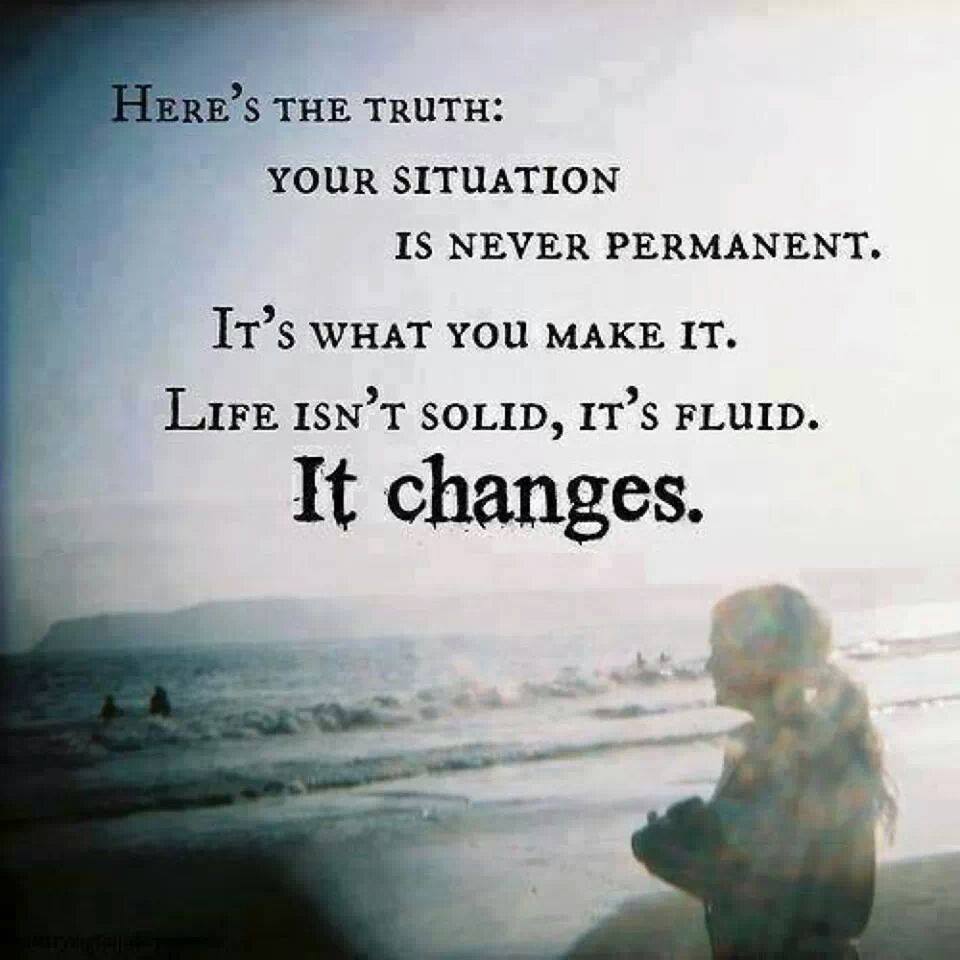
It has been said, I think it was in the movie ‘Forrest Gump’, that “in order to move forward, you have to leave the past behind” or something along the same idea.  I admit to having problems with letting go of what happened in my younger years, especially during times when my mental illness flares up especially bad.  During such times I have a very hard time coming to accept that my life did not turn out how I remotely imagined it would when I was sixteen and looking ahead to the vast expanse of years that was ahead.  At that age, I pictured that I would be doing something in medical research and married with at least a couple of children and living in some large metroplex by the time I turned 35.  Like many intelligent kids that could be classified as somewhat ‘nerdy’, I dreamed of the day I would move out of my hometown of less than 500 people and onto bigger and better things.  Like most of the few close friends I had, I so desperately wanted out of Nebraska.  I figured there was nothing here for me in the science and medicine fields and I would be wasting my life if I stayed behind.  Well, time has a way of making fools of even the smartest of us.

I never left Nebraska while all the friends from high school I stayed in contact with did.  In fact, none of the friends I made in college stayed in state either.  I didn’t end up working in any scientific or medical field for even one day of my life.  I certainly never got married or had kids.  I never even worked in a job that would require me to graduate high school for any real length of time, and I essentially failed at those jobs.  In spite of my illness, I retained almost all of my natural intelligence even though now my ability to work under stress and read anyone ‘between the lines’ was completely gone.  Any of these instances, let alone all of these put together, were serious blows to my pride and ego.

For the first several years of my mental illness, I agonized over where I went wrong.  I retained my natural intelligence yet I couldn’t do well in even minimum wage work.  It was baffling to my caseworkers at Vocational Rehab that I was so smart yet couldn’t handle any real stress.  For a long time, I thought I just wasn’t working hard enough and that work was supposed to suck.  I had spent my entire life hearing adults complain about their jobs as if their misery was something they took pride in.  So I just tried harder and attempted to abandon any idea that I was supposed to enjoy work or even life for that matter.  In time I came to believe I was doomed to be a failure at working a regular job.

For the next couple of years, I threw myself into my writing.  I was working part time at the courthouse as a janitor by this time.  I came to believe that the only way I could ‘make something of myself’ was to write a decent selling book.  I knew that the odds were against me as less than one percent of even published writers would make above poverty level if they relied solely on their writing work.  Well, that didn’t work either.  I self published a couple books of poetry, a book about my experiences as a mentally ill person in a ‘chronically sane world’, and even wrote rough drafts for two novels.  Found out the hard way that I have almost no talent for writing fiction.  I don’t even like reading fiction, especially modern fiction.  Even though I sold a few dozen copies of my mental illness book, the others didn’t sell at all.  So for a few years after that, I felt like a failure as a writer.

Now that the traditional writer door had been rudely slammed in my face, I became very depressed and angry.  I couldn’t understand what was the point of retaining my intelligence and not being able to use my abilities to even support myself, let alone help others.  I couldn’t figure any of this out.  I just couldn’t let go of what this illness cost me.  Occasionally I still find myself angry over what I lost.  I had the example of what I could have, and should have, been in the person of my older brother.  He is currently working as an electrical engineer for a defense contractor, making more money per year in his mid 30s than my parents ever made at any point in their careers, living in a excellent neighborhood in a metroplex outside of our home state, married to an intelligent woman (who also is an engineer), and has four children that he’s absolutely devoted to.

I suppose it’s wrong to be envious of him, though a part of me sometimes is.  I know as kids, I actually got better grades in school and read more books than he did.  When I’m in the grips of my mental illness, I often find myself thinking our lives could have been similar.  When I’m seriously in the grips of the illness and feeling nothing but anger and hostility, I find myself thinking our lives could have been easily reversed with me doing the work of my dreams and him being mentally ill.  Fortunately that doesn’t happen often.

When I’m not caught in the grasp of the illness, I find it very easy to let go of my past and move forward.  I have found an outlet of sorts though blogging.  Sure I don’t have thousands of visitors every day like some blogs here on wordpress.  No I’m not known outside of my family, my current hometown, my handful of friends, and people who follow and/or happen to stumble on these writings.  No, I haven’t made even one cent off these writings on this blog.  Sure, I’m dependent on the government for my medications and even my living.  Yet, when I am doing well, I have completely accepted all the aspects of my mental illness and have moved forward.  It is now only the small minority of times when I’m in the grips of the illness that I have to worry about stumbling and dwelling on everything that has happened over the last seventeen years.

Losing Weight while on Anti-Psychcotic Medication

doctor-2 mental-health

In addition to my problems with mental illness, I’ve been fighting problems with having an unhealthy weight since at least age seventeen.  I spent the first several years of my schizophrenia diagnosis trying to figure out the many aspects of my personal mental health problems.  I was able to figure out that there were seasonal elements, certain situations and stressors that made the illness worse, people and places I needed to avoid as much as possible, and I learned coping skills that made the mental part of my health much more tolerable.

While I was covering the mental aspects of my health, I completely ignored my physical health.  I gained a lot of weight during the first ten years of my diagnosis.  One reason I neglected my physical health was I often lacked motivation to stay with an exercise program.  I would do fine the first few days.  When the inevitable aches and discomfort set in, I’d take a day or two off.  I felt terrible for taking days off and would in time drop the program.

A second reason I gained weight was I fell into the trap of believing I couldn’t lose weight while on anti-psych medication.  Many anti-psych medications have weight gain as one of their most prominent side effects.  Noticing I was at a very unhealthy weight even as far back as early 2007, I went off my medications in an attempt to lose weight.  Real bad idea. I had a relapse after being off medications for three months.  Whatever weight I lost in that time off the medications was gained back and more.

Finally about the summer of 2013, I’m guessing, my general practitioner  told me that I would have major health problems, including diabetes, heart issues, and probably even early death if I didn’t do a complete change of my eating habits and physical activity.  That gave me an incentive to at least attempt to lose weight while on anti-psych medications.  My options at that point were to either keep blaming the weight gain on my psych meds and wait for an inevitable disaster perhaps only a few years in the future, or I could get more active and accept responsibility for my physical health with the same dedication I took to getting my mental health managed.  I guess my decision to lose weight came down to the persistent thought that my well managed mental health conditions would not matter if my physical health deteriorated.

My first efforts to lose weight were not entirely successful.  Beginning to exercise wasn’t much of a problem as I had the idea of dealing with diabetes, heart disease, and a mental illness all at the same time to keep me walking at least four to five days per week.  It was the adjusting my eating habits that was the major issue.  I would lose weight some weeks.  Other weeks I would not lose and often actually gain.  This went on until about April 2014.

After several months of exercise and learning all I could find about good nutrition on a small budget, I reexamined everything I was doing.  Every thing checked out just fine.  I even changed some of my psych medications at my psych doctor’s recommendation.  I finally decided to track everything I was eating for at least a few days.  It took only one day to figure out exactly how much I was eating on an average day.  That was an attention grabber.  I figured out how much I was eating and how much I was burning off through physical activity.  I could see that on even average days I was taking in more calories than I was burning off.  I found out why I wasn’t losing weight as easily as I wanted.  It wasn’t the psych medications causing it all alone.  It was that I had no idea how much I was actually eating.

Once I figured this out, I committed to tracking everything I ate every day.  I was able to do this though tools and trackers with a free account at wedmd.com.  I just type in what I eat, how much of a food I eat, and how much exercise I do.  I had to do this everyday for at least the first two to three months every day.  Once I knew how much I was eating everyday as well as how much I was exercising everyday and was recording it, that is when the weight starting coming off.  Since I started tracking everything I ate and all exercise I did I’ve lost over 45 pounds.  I’ve been doing this tracking since the middle of April 2014, so I’ve been doing this for right at five months.  I’m sure that for those who wish to have a diet and exercise tracking app for a SmartPhone or an iPod there are several good apps available that don’t cost anything.

Weight loss while on anti-psychcotic medications is possible.  It can be done.  Like anyone else trying to lose weight, it takes a lot of work, a lot of discipline, and it takes time.  I suppose I have the thoughts of where I once was, where I’m at now, how much better I feel now than even six months ago, and where I can and want to be as motivators.

Seasonal Aspects of Mental Illness

10294454_4277668317238_353607190635132529_n


It’s been awhile since I last posted anything of my own doing on this blog.  For that I apologize.  Sadly, it has been a rougher last few weeks than normal.  Yet this was expected as late summer, especially the month of August and early September, have traditionally been the toughest times of year for flare ups of my mental illness.  There is in my case seasonal aspects to my mental illness problems.  Both times I committed myself to a mental health facility have been early in September after weeks of buildups of problems that usually began about late July.  After having these mental illness problems and seasonal flareups for going on seventeen years now, I have come to see that there are times of the year when my illness is often far worse than normal.

Even though I know and acknowledge that there is a seasonal aspect of my mental illness, I still haven’t pinned down an exact why it is in late summer.  Often, people with seasonal aspects of mental health problems tend to have their problems in the winter or during times of the year when they experienced at least personal tragedy.  I doubt in my case that my seasonal aspects are due to personal tragedy as people who have died that were personally close to me have almost without exception died in the winter months.  It could be that my seasonal problems have to do with weather as late summers in my home state of Nebraska are typically very hot, occasionally humid, and often suddenly changing.  I personally always enjoyed cooler weather as my favorite times of year are autumn and spring.  I don’t really mind winters that much except that I personally don’t like driving on snow packed and ice covered roads that are the norm in my part of the USA.  Regardless of my appreciation for the change of seasons, don’t sign me up for summers in Texas or winters in Minnesota.  I have college friends from both places and I’ve heard their ‘horror’ stories about the weather.

I no doubt have times of the year when my mental illness is worse than others.  Unlike many people, my problems are often in the summers instead of the winters.  I still haven’t figured out the why as to this.  I simply know after having these problems for at least seventeen years that there are trouble times in the course of the year.  I’ve come to understand this and plan accordingly.


10 Good Things About Having A Mental Illness

All credit for this post goes to bravelybipolar.wordpress.com. We hear about the negatives of mental illness all the time. Those of us are well aware of the issues. This post is a ray of sunlight in an otherwise dark topic. Enjoy.

BravelyBipolar's avatarBravelyBipolar

We hear so much about the negative side of having a mental illness, all of the stuff that can go wrong, the medication changes, the medication side effects, etc. Sure, that’s all part of it, but there’s so much more to it. Just as we are NOT our illness, these negative parts are NOT the whole of the illness either. There is so much good that can be accomplished as a result of having a mental illness…here are just a few.

1. Life is NEVER boring! There is always something going on (be it bad or good). It makes for an interesting life.
2. It can open doors you never thought existed. For example, I have been given many opportunities to help shape national and local legislation that have greatly benefited mental health care and mental health education.
3. There is an increased capacity/ability (even responsibility) to help others. Through…

View original post 538 more words

Today’s college freshmen were kindergarteners on 9/11, and other signs that this generation is different from yours

I take no credit for this. I’ve been reading lists like this since I started college fifteen years ago. But now that I’m a few years beyond the dark side of thirty, some of this is really starting to hit home. I hope you read this and enjoy.

Reflections on My College Years with a Mental Illness

418607_483125201753557_1514569461_n


I currently live in a town that is home to a small state university.  School will be in session within the next two weeks once more.  As a result, several thousand college students will be coming back and this town will really come back to life from it’s annual summer hibernation.  Even though I graduated from ten years ago, and had a failed experiment that was grad school, I still enjoy seeing the college students returning and resuming what, for many Americans, has become a rite of passage into adulthood.  


GLA7035


All of this has me remembering when I went through during these years, not only in college but also as my mental illness progressed and eventually stabilized into some predictable cycles.  When I started college in the fall of 1999 ( I know, practically the dark ages to kids now coming of age), the internet was still in it’s early stages and almost no students had lap top computers, let alone got laptops just for enrolling.  The iPod would still be a few years away, so we still carted around tons of music CDs.  The best parties, get togethers, etc. were always thrown by people who had massive stereo systems that had the capacity to change dozens of CDs without having to do it manually.  No quicker way to kill a party than having to change discs when the music ran out.  Like I said, it would be seen as the dark ages to kids just starting out now.

school201


One thing I did have even back in the late 90s and early 2000s that helped me  a great deal was the free use of my college’s counseling service.  I was in the early stages of what I would later find out was my mental illness when I grudgingly went to a counselor.  I had my mind full of the stereotyped visions of lying on a leather couch, confessing my darkest secrets to a Sigmund Freud look alike, looking a ink blot cards, and having to talk about my relationships with my family.  What I found was simply someone who would actually listen to my problems and issues. The good part was that, in college, no one really knew or even made an issue of me going to counseling.  At my counselor’s urging, I saw a psychiatrist to do some evaluations.  I also underwent complete physical evaluations, including a scan on my brain and brain waves to rule out anything physically causing those problems.  After all these evaluations, from which I missed quite a lot of classes, I was given a diagnosis of Paranoid Schizophrenia.

mental-health

I didn’t consider a diagnosis to be devastating.  For me, it explained a lot of why I had problems socially and was going through what I was.  It was a confirmation that I wasn’t making these problems up to attract attention or just feeling sorry for myself.  Yes, it did put some of a damper on my social life, social activities, and did force me to give up my dream of going into medical research.  But, I still managed to graduate from college, have several friends, learn some things I wouldn’t have had to, or bothered to, otherwise.  I’m glad for the experiences of my college years.  I’m glad I made the friends I did.  I’m glad for the counseling services at my college.  I only hope that students who are going into college for the first time find their niche, make some good friends, seek out help if and when they need it, and come out ready to face the challenges we all face in adulthood.

Normal vs. Not-Normal and What Is vs. What Isn’t

whybenormal

I will readily admit that I would, by no stretch of any neurotypical person’s imagination, be considered ‘normal.’  I don’t, thanks in large part to my mental illness as well as my own individual preferences and tastes, find things that most people would find enjoyable to be to my liking.  I don’t like crowds, I really have a hard time trusting people I’ve just met, I don’t enjoy much of what consists of acceptable socialization (i.e. going to bars, going on dates, small pointless ‘chit-chat’, attending large social gatherings in enclosed spaces, etc.), I certainly don’t like arguments or debates (as I’ve already expounded on in a previous blog entry), and I don’t see why it’s socially acceptable to appear like I’m dumb or lacking knowledge.  I’ve read so many books on ‘socially acceptable behavior’ that flat out states things like ‘the smartest man/woman in the room/group/organization/etc. is putting a bulls eye on their backs and is inviting ridicule and ostracizing themselves to the group.’  

I never understood the tendency of people to treat poorly those who are smarter or stand out from the norm (or average) in anyway.  I use smarter as an example because I’ve always held my smarts/intelligence/wisdom to be not only a source of pride and identity, but even as a child I knew my intelligence would be my way to carve out survival in the world.  Yet most of my classmates, many of my teachers, and even some of my family members didn’t see things this way.  Instead of the kid who read at a  12th grade level as an 11 year old, they saw the kid who was always picked last in softball, didn’t really like socializing with kids (and adults) with whom he had little in common.  Instead of seeing a teenager who did extremely well in classes like history, english, biology, and chemistry, they saw the kid who struggled to pass algebra and didn’t do well in shop class.  Instead of seeing a seeing a kid who absolutely loved speech and drama productions, they saw the kid who played football but didn’t like it and ‘had an attitude problem’ or ‘had problems with authority’ because he was always asking questions and held odd ideas (many of which in later years  proved to be true).  

Even now people don’t always see me as a mentally ill individual who can live on his own, manages what little he receives from Disability with little to no outside help, writes a quite unknown blog about mental illness, manages his friends (most of whom are loyal friends for life) and social life well, and has never been trouble with the law.  Sadly many people see a man who has no ‘permanent job’ (as if there is such a thing in the 21st century), relies on Welfare (and thus is perceived as a drain on society and taxpayers), is somewhat odd because he speaks out on what he believes (especially if it flies in the face of conventional wisdom), is someone to be pitied because he doesn’t have legions of friends and supporters ( I would much rather have a small, but loyal, base of friends and family who overlook my differences and the fact I’m not normal as opposed to have an army of superficial friends who’ll abandon me with any minor shakeup to their normal lives), and someone who is quite overweight (never mind I’ve been making steps to remedy this sad fact and have lost 40 pounds in 4 1/2 months).


tridebeingnormaldintwork


In short, I am not normal.  I am not ‘average.’  I am not neurotypical.  I am not popular (nor do I seek to be).  I will not tell anyone just exactly what itching ears wish to hear.  I tell the truth about what it’s like to be mentally ill in a chronically sane world.  Believe me, it isn’t always pretty and I have no doubt lost ‘friends’ and ‘supporters’ over it.  The truth isn’t always pretty.  The truth can be threatening.  I have, since I was 8 years old and discovered I had some unusual intelligence and wasn’t what my classmates and some teachers considered normal, refused to knuckle under and be what I knew I wasn’t.  What I was and what I am is good enough for me.  It is what I was made to be.  It is alright with me that I am what I am.  I don’t understand why it isn’t good enough for most neurotypicals I have met.

Mind Health, Body Health, Placebo Effect, Expectations

I imagine this entry is some continuation of my last post.  I am absolutely convinced there is actually quite a bit of crossover between how one feels mentally and that can influence physical health and well being.  Likewise I am convinced there is a crossover in how one’s physical health and influence mental health and stability.  About the only real ‘scientific’ evidence I can truly point to support my convictions are ‘placebo’ effects.  In some medical studies where the patients, and sometimes even the primary doctors, believed that they were getting real medications but were in fact actually getting pills that actually had no real medication.  Many of the results of these tests found that the patients who received the placebo, or inert, pills often did just as well as the patients who were taking the real medications.

I will state up front, I am not a doctor.  I am by no means suggesting that anyone, mental illness or no, should go off any medications without a doctor’s supervision.  I am not qualified to treat, diagnose, etc. anyone.  I have issues even with my own problems and life. 

What I am getting at is that sometimes something, whether it be a treatment, medication, set of beliefs, set of actions, etc. works for us as individuals because we believe they were work and we want them to work.  I suppose it’s sort of like if someone thinks they do well at a job because they look and act the part, then that is true for that person.  I would even venture to say this applies to even basic human emotions, such as love and anger.  If you think you are in love, or angry, with someone, then you are.  I guess that if you think something works for you, then maybe it does for you.  Some of the wisest ideas I ever came across can be expressed by this short statement, “I think, therefore I am.”

Think about this for awhile.  If you, or someone you know, are always complaining about things that you either have or control over or won’t do anything to change, why should you expect to have any happiness at all?  I’ve heard many philosophers, gurus, experts in many fields, etc. state that what a person thinks about will come about.  That’s only part of the equation.  What is really should read is something like, “What a person thinks about and acts about will come about.”  I suppose the phrase “I think, therefore I am” should be coupled with “By their deeds you will know them.”

I didn’t really start feeling really good mentally until I, along with my writing and promise to myself that I would never stop learning, decided to improve my physical health.  Yes, reforming my previous coach potato ways were tough.  I even failed at these attempts the first few times.  Yet, I can tell you that after the first four months of getting as serious about my physical health as I am about my mental health, it is more than worth the work I’m putting into it.  Though I am not close to making my ultimate health (and weight) goal, I am far better off physically and mentally than I was even four months ago.  I personally believe the improved physical health is breathing new life into my mental health.  Likewise the renewed mental health is fueling the improving physical health.

No, I don’t have more scientific evidence that mind-body, body-mind health effect each other besides the placebo effect.  But I know in my own life, and experience, there is a connection.  I truly am convinced of this.

Coming Back, Losing Weight, Mind-Body, How and Why

It’s been a long, long time since I last posted anything to this blog. For the record, I never gave up writing. I just took about a three month long vacation. It has been the longest time, in fact the only real time, I took a break from just about anything I do. An update on how things have gone lately is in order.

For approximately the last four months I’ve been seriously concentrating on getting back into good physical health. As a result of changes in eating habits and exercise routines I have dropped at least 35 pounds. Yes, I still have a long way to go before I get to my final goal weight. I notice a positive difference already, not only in physical health but also mental health. I’m not doing anything really out of the ordinary. I’m not on any fad diet. I’m not exercising several hours a day. I’m not eating organic food as I’m on limited budget as is. And I certainly am not taking any diet pills, powders, etc. I suppose if I was to describe my approach, I’d simply call it cherry picking what works for myself from several different types of diets and discarding what doesn’t work for me. Some may find it odd that I pick and choose rather than follow only one set plan with an almost religious fervor as many people do. My grandparents had a phrase for this tailor making a plan from only the best of everything that works for one person and may not work for someone else. It was ‘using your head.’

As my physical health gradually improved so did my mental health. I really do believe there is a mind-body, body-mind connection. Chinese medicine has innately known this for centuries. Western medicine for the longest time, having no real way to measure this, denied such a connection. This connection was denied even though it completely ignored any real world practical experience. That in itself is not ‘using your head.’

It is completely possible to know something is or is not so even if you can’t completely explain the why. For thousands of years, ancient peoples knew that the constellations in the night sky not only changed over the course of the year but changed at the same times each year. It wasn’t until a relatively recent time in human history that we figured out the why. I can’t offer a functional explanation why I feel better mentally after losing 35 pounds in four months, let alone a scientific one. I know simply that I do. That alone is enough reason to keep me working at losing weight.

A Few Poems


ImageImage

I have for a long time thought that writing was a form of therapy for myself.  One of the forms of writing I engage in is poetry.  Here I am posting three poems I have recently written.  Hope you enjoy them.


Chisel Away

By Zach Foster


Chisel away all that is not the sculpture

From the stone of your life.

Find the beautiful creature

You were meant to be

Hiding within the rock.

Polish away the rough edges

And the tough smudges

From the stone of your life.  

Ó Copyright 2014 by Zach Foster


Guises and Gall

By Zach Foster


Where do we go from here

Under our guises and gall

Breaking ourselves inwardly

To make ourselves look outwardly

Proud and Strong?

I just want to cry

For what I have lost

Giving up my heart

Giving up my love

Just to look cool.

Where is the payoff

We were so promised

Following this path

Of selling ourselves out

High and Dry?


Ó Copyright 2014 by Zach Foster


The Journey

By Zach Foster


Were are we going from here

On this mad, obscene journey of our lives?

Will fame and fortune be in the cards?

Or will we struggle to pay rent?

Will we allow ourselves to be weighed down

By the mundane worries of our days,

Buried in silent obscurity?

Will we instead cast aside the chains

That hold us in place

And soar with eagles

Over the vistas and skylines of the world?

Of the journey there are many routes,

True beauty lies not in the goals,

But within the journey itself.


Ó Copyright 2014 by Zach Foster