Finding A New Therapist and Trust Issues

lisa_sobaka

Today I’m going to write about one of the aspects of mental illness that happens to most of us with mental illness diagnosis at least once in the course of our lives.  This is the subject of changing therapists.  For me, it was a bit daunting to change from a therapist that had developed a trusted relationship with me.  Trust is a big, big issue for mental health patients.  I don’t trust anyone right away under any circumstances.  My default mode has been, traditionally, not to trust someone I just met until I can figure them out well enough to tell if they are trustworthy.  The trust of a mentally ill person does not come as fast or easy as it would with a chronically normal person.  But that trust, once broken for any reason, will never be regained.  It rarely matters how small or insignificant such breeches may seem to a normal. Once a mentally ill person has any reason to doubt your sincerity, that friendship/relationship/etc. is as good as dead.

I write all of this to simply state that we who have mental health problems have problems with trusting people right away.  This is perhaps due to some of us being more sensitive to verbal cues from others.  Some, like me, may not easily trust because we have been betrayed too many times as young people because we had difficulty reading who can and cannot be trusted.  Others, also like myself, may have never learned, or were born knowing, the proper rules of social etiquette.  Either you normals were born knowing social cues or that subject was covered during one of the dozen or so days of school I missed between kindergarten and 12th grade.  I really don’t know how to socialize properly.  I really don’t know what is the appropriate time and proof needed before I can properly show trust.  Many of us mentally ill simply do not know these unspoken rules of social etiquette.

After two sessions with this new therapist, I still don’t know if the trust can be made.  Yes, he seems to be competent.  He seems to care about me, at least in a professional sense.  But, trust is a big deal.  Not only is it a problem to know if I can trust someone, it is also a problem for me to know I have someone’s support, appreciation, friendship, etc. Even after two hours with this new therapist, I still don’t know if this is someone I can trust.

I have had too many instances when I thought I had someone’s trust (again with people I should have never opened up to at all, like coworkers and bosses), that I found out that my trust was violated.  I have had too many instances when a coworker, boss, former friend, etc. told me we were on good terms at first, then go silent for a long time.  Then, I’d get that call into private conference where I’d be ambushed with a laundry list of things I was doing wrong and people I was irritating.  It is my experience that no one, and I mean absolutely no one, in any kind of authority wants to see me unless I am already in serious trouble.  Many mentally ill people are like this as well.  I have been told I have problems with authority and no respect for rules.  My problem is I don’t believe in superficially trusting someone who could stab me in the back at any moment for crimes I had no idea I was committing.  I also cannot understand why rules that make no sense or are obsolete should be followed.  I have never been able to hold that level of cognitive dissonance between my actions and my thoughts.  Most mentally ill people are like me in this regard.

I have trust issues.  I don’t trust people I just meet.  It’s not because I am an arrogant and aloof jerk.  It is simply because I cannot read the social and nonverbal cues that say whether or not I can trust an individual.

Not Holding ‘Traditional’ Employment, Losing Weight, and Changes

school201

It’s been at least two and half years since I last held a traditional job of any kind.  No doubt some would argue that since I have a good amount of intelligence, I have no reason not to be doing some kind of job.  I’m sure that some look upon me with disdain because I’m on Disability Insurance for a condition that they don’t understand, let alone acknowledge it’s existence.  At this point in my life and development I don’t hold this against anyone.  I’ve come to accept, without any degree of resentment, that some aren’t going to grasp why I decided to opt out of traditional employment.

I absolutely intend to go back into the workforce at some point in the future.  But, at this point and time in my life, I believe it far more important for myself to lose weight and get back into good health before I rejoin the workforce. As of this writing, I have lost at least 60 pounds since the middle of March 2014.  I still have a long way to go before I hit my final health and weight goal.  With my body build being what it is (short legs, short arms, large body, very thick bones, and more muscled than average) I doubt I’ll be able to finish a marathon even when I make final goal.  But I can certainly be healthy even with the natural framework I have.  I think that anyone can if they make the efforts to be more conscious about what they eat, what they do for exercise, and know themselves well enough to plan around their strengths and weaknesses.

doctor-2

Sadly, when I worked I wasn’t able to lose weight.  This was even with doing jobs like janitorial and factory work where I had to keep moving at all times.  Whatever I burned off from these jobs I consumed back from the course of not tracking what I ate.  I wasn’t conscious about what I ate.  Since I usually came hold tired and worn out, as a result of carrying so much weight and working physical jobs, I made no efforts to exercise when I wasn’t at my place of employment.  And thus a vicious cycle of unhealthiness, fatigue from work, and depression plus anxiety from being out of shape enough I couldn’t do what I wanted in my hours away from the job was going on during the years I held even part time employment.  Serious changes were needed to break this cycle.

After I left my last paying job, I set out to attempt to get healthier.  I read many books on dieting, exercise, nutrition, motivation, and mental health.  I also decided to take a very long and completely honest assessment of my strengths, weaknesses, and tendencies.  I liked much of what I was able to uncover (my intelligence, my ability for keeping accurate records, attention to details, ability to adapt quickly, ability to learn quickly, etc.).  I also didn’t like much of what I found about my drawbacks (tend to be discouraged in the day to day work, often not keeping attention on the larger picture, tendencies to distraction, tendencies to attempt too many projects at once, tendency to get discouraged when not able to see progress, etc.).  I decided rather than trying to improve my deficits, I would instead develop my natural strengths enough to negate my weaknesses.

I decided I wanted to lose weight in the summer of 2013.  I didn’t seriously start losing weight and getting healthier until April 2014.  That is when I started tracking everything I ate.  Just as vital, I tracked all exercises I did.  I wanted to not only know what was going in my body,  I was also interested in what I was doing too.  Over a period of a few weeks, I noticed my activity was increasing while my consumption was decreasing.  Stretch that over several months, my consumption is still decreasing and my activity is not only increasing, but is getting easier to do.  I’m embarrassed to admit this, but on the day I decided without a doubt I was going to get to a set goal weight, in my case 225 pounds, on or before a set date in time, this date was March 17, 2019.  I picked March 17, 2019 only because it was exactly five years from the date when I decided I was ready to set out on the long journey to good health.

10003113_10152340093435460_650990473_n

By March 2014, I had done an inventory of my strengths, weaknesses, and motivations.  I also had a working knowledge of several different types of diet programs (such as Weight Watchers, South Beach, Paleo-Diets, Glycemic Index Diets, etc.).  I had stated, and written down, my intentions of losing weight and getting healthy by stating an exact weight I wanted to be at and gave myself a set time period to do this work.  I knew I enjoyed walking, whether it’s in a park or in the old downtown of my hometown.  So walking became a major element in my exercise program.  I also decided I would track what I ate and what exercises I did every day.  If this sounds like a lot of work, it is a lot of work.  It took almost fifteen years to get as unhealthy as I was.  I wasn’t going to get back to good health rushing into a program without doing some planning.  No one builds anything that lasts, it doesn’t matter if it’s a dog house or the new World Trade Center building in New York, without sitting down and making some plans.  Taking the time to evaluate what you have to work with and making plans accordingly is the key to any undertaking, not just getting into good health.

9530

Things You Can Do On Your Own For Your Mental Health

This post is going to be about things you can do on your own to help alleviate stress, depression, and anxiety that goes along with mental health problems. There are times that, in spite of all the counseling, therapy,and medications involved, we still have problems. This is when we with mental health issues have to resort to our own resourcefulness. This post is going to be what you can do when you are primarily alone or in a private setting. The issue of avoiding problems in public will be the subject of another post later on.

For myself, there are at least three activities that I have found that help ward off stress, anxiety, and depression. One of these is writing out my frustrations. I have entire notebooks full of the writings I have done in efforts to alleviate stress, anxiety, and depression. I write in these even when I’m feeling well as a sort of preventative maintenance. I look back over these on occasion just to see if I notice patterns developing, especially over a period of weeks and months. From these writings alone I’ve noticed that my individual illness has a seasonal pattern to it, were I tend to do worse in late summer and around Christmas/end of year holidays than I normally do. My times I do best are in spring, early summer, most of autumn, and surprisingly late winter. I probably wouldn’t have figured out these patterns as soon as I did without my writing about what I was going through. An important factor in my journaling is that I do not censor what I write. I am honest with myself, even sometimes brutally. Of course I’m the only one who sees these writings. I also usually shred my writings after about two to three years as kind of a way to let the past go.

The second activity I do to alleviate stress is listen to music. I absolutely love almost all genres of music and the type I listen to varies even within a given day. Even though I have no musical talent myself, I appreciate those who can play instruments or sing and are not afraid to. To the end of listening to music I have an iPod, a subscription to Pandora internet radio service, and even look up music and music videos on youtube. A good session of listening to music can relax me even when I feel like telling someone off.

Finally, the third activity I do that helps to relax me is just silent time/meditation/prayer. While I’m not going to delve into any religious theology discussions as there are plenty of other blogs that do that, I do know that meditation, prayer, and just taking a few steps back have all worked well for me. As far as these go, I found they become even more effective once I stopped worrying if I was doing these ‘right.’ Even though I grew up in a devout Christian family, we were never required to memorize prayers when I was growing up. We just spoke what was on our hearts and minds at the time. In short, the only advice I give on this type of relaxation is don’t worry about doing it a right or wrong way.

There are plenty of things/activities you can do on your own to help alleviate your mental illness issues. While I have yet to find an activity that will cure all my problems at all times, I have at least found a few that work well for me. I’m interested in hearing from others as to what helps them to relax, calm down, etc.

Struggles With Mental Illness in College, Part 2

            In a previous blog entry, I wrote about my struggles during the first year and a half of college before I began treatment.  This entry will be about my struggles after my treatment began.  Just because I was under treatment didn’t mean my problems were over.

            During the last three years of my collegiate career, I never achieved the quality of grades I had during my first year of college.  I also changed over to a different major.  I originally started college as a pre-pharmacy student.  After a year and a half of struggling with my mental illness as well as my classes, my grades were bad enough that I wasn’t going to be getting into pharmacy school.  I needed a change.

            I switched to a business management major, which was a surprise to my family.  I had never taken any business classes in high school.  I didn’t have much of an aptitude for sales, and I was quite an introvert.  So to my family and friends the move didn’t make much sense.  But to me it made a great deal of sense.

            In my line of thinking at the time, I wanted to be able to be employable with a good job as soon as I graduated from college.  Even though I was really passionate about literature and history, I always figured I could read all the history books and classics of literature on my own time when I wasn’t studying for my business classes.  With my best friend being a history education student helping me out with history and classical literature books, which is exactly what I did.

            I admit with this “Dual Study Program” with my studying business classes officially by day and reading my classical literature and history books late at night and on the weekends, I didn’t have much time for outside socialization.  I had my small core group of friends, and I also made it a point to be friendly as possible to as many fellow students as possible.

            As the last three years of college went on I slowly picked up a few more friends and gradually went to more social activities.  There were a few music bands on campus that occasionally played weekend concerts that I went to.  They were pretty much cover bands that also played some of their own material.   I made a few friends with some of the band members through that.

            I also made a few friends through some of my business clubs like Students In Free Enterprise.  I also went to many of my college’s home baseball and basketball games.  I preferred the baseball games because of the more laid-back atmosphere of baseball and I had a few friends on the team.  I also made a few friends through games of softball, ultimate Frisbee, and flag football.  I wasn’t a fast runner but could be a vicious blocker.

            I bring all of this up to show that I was able to have the average college experience in spite of having a mental illness.  There were a few things I obviously couldn’t do, namely the drinking scene because of my medications.  But I wasn’t in college to drink and drug.  I was there to get a degree.

            I didn’t work during the school year because of the stress of going to school full time, having a mental illness, and having a job would have just been too much.  So I worked in the summers instead.  It also helped that I had a good academic scholarship based on my grades.  Even though I wasn’t getting straight A’s, I was still managing to do well.  And I was enjoying the college experience at the same time. 

            A strange thing happened during my last year of college, I became interested in writing.  I had been reading voraciously the previously two years, so I suppose that writing would only be the next logical step.

            All of the struggles, problems, victories, and defeats of five years of college came to a culmination on May 8, 2004.  That was the day I graduated from college.  Graduating from college meant that I had overcome the problems of mental illness and accomplished my life long goal of finishing college.

            While it’s been several years and I still haven’t found permanent employment in my major, I still won because I was able to finish college.  I thank God that I was able to finish in spite of my illness.  Finishing college by itself is hard enough.  Throwing a mental illness in the mix makes the degree of difficulty pretty steep.  I hope that by finishing college that perhaps someday I can encourage someone with a mental illness to reach for and achieve their dreams.

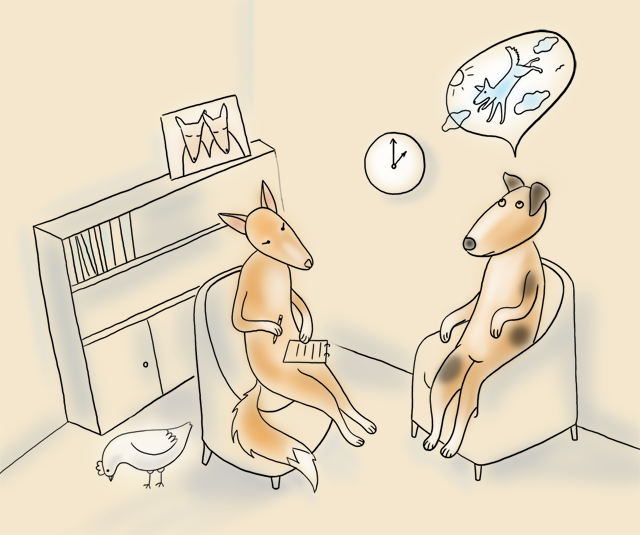
Coping With Limitations and New Expectations

When I was first diagnosed with paranoid schizophrenia I was clueless as to what exactly that entailed.  I knew that I would have to take anti-psychotic medications for a while and go to therapy.  Yet I had absolutely no idea how much my life was going to change.

As a result of my worsening mental illness, my ability to concentrate gradually became less and less.  I also had problems remembering details and paying attention.  It became bad enough that I had to give up on my original career dreams.  I started college as a Pre-Pharmacy student with the intention of becoming a research scientist for a pharmaceutical company.  Because of my worsening mental illness and deepening paranoid this dream became impossible to achieve. 

My grades were declining to where I wasn’t even sure I could stay in college, let alone go after my dream.  A change in course was in order.  Even though I knew very little about the subject I switched over Business courses.  My thinking at the time was I wanted to be employable immediately after college if I did get better.

As my college career progressed in my business classes I never achieved the level of academic success I once had.  This was due to my illness making it impossible to concentrate for long periods of time or pay attention to minute details.  I also had problems prioritizing projects so I often had to rush my college class projects.  As a result I didn’t get as good of grades as I could have had I not been mentally ill.

With all of the effort I was putting into just getting through my classes, I wasn’t even thinking about what jobs I would be good at once I finished college.  I really had no clue what I wanted to do once I was done with school.  I didn’t research potential careers very closely, at least not careers that someone with my particular illness could do.

I was in a really odd place, looking back in retrospect.  I was mentally ill but I had been able to maintain much of my original natural intelligence.  I had always been one of the most intelligent kids in my class in high school and even managed to do well in my classes in college in spite of my paranoid schizophrenia. 

My problem was I had serious stress and paranoia issues concerning other people.  Those issues, along with my problems with anger and depression, made, and still make, holding a regular forty-hour a week job for any length of time impossible.  It was, and still is, frustrating to be sitting on this intelligence but not able to use it, at least not in a job.

After I graduated from college I applied for every business related job I could find.  I didn’t get many responses to my inquiries.  I was sending over twenty resumes a week but was having absolutely no luck in landing an interview.  I was painfully finding out that the “apply for everything out there and hope something hits” tactic to job applications does not work.  It wasn’t until a few years later I learned that it’s far better to focus in what you want and be patient.

I thought that I wanted to work in banking or insurance.  I believed that these were stable industries that would be not too difficult to get into.  Yet I couldn’t get interviews for even these industries.  I was painfully finding out another truth: Job hunts immediately after college take a long time.  The person who finds a job before graduation is not the rule; he or she is the exception.

Finally after three months of living with my parents and futile searching, I changed my expectations.  I decided that I was taking the first thing that came along.   That job came in the form of a minimum wage job as a store clerk, and this was a part time job on top of that.

The first few months weren’t that bad.  The boss liked me and I worked well with the customers.  Yet I had a coworker that was constantly on my case and was very unpleasant to be around.  It finally became bad enough that after four months of this that I decided as soon as something different, not necessarily better, came along I was going to jump on it.  The biggest reason was to be done with this disagreeable coworker.  I couldn’t put my finger exactly on it, but I think this coworker found my quirks of being mentally ill frustrating.  I never said anything negative to this person though inside I was seething angry with this person.

One thing I couldn’t deal with very well in the past because of my illness is work place politics.  I have gotten better about it with age because of better coping methods and being able to better tell when I’m just being paranoid. In my younger years I could never understand work place politics, pecking orders, jockeying, etc.  My thinking as a younger man was we are on the same side and we ought to make an honest attempt to get along.  Now that I’m a few years older and have a few years of work experience, I have just accepted politics in the office as just part of human nature.  Just because they occur does not mean that I am expected to participate whole-heartedly in the gossiping or anything malicious.  But I am expected to do my job to the expectations of my bosses and coworkers, and that is what is ultimately important in keeping a job.

If you are an individual with mental illness and you do seek a job, know that there are personality differences among your coworkers and office politics.  Just know that these are rarely personal, they are just part of human nature that cannot be changed.  It took me a real long time to figure this out.  Until I did figure it out, my working life was often miserable simply because I had misguided expectations.

My expectations have changed so many times over the years since I was eighteen.  My expectations about working alone has gone from where I wanted to be a great research scientist to wanting to work in insurance to hating even part time work to fearing I would never work at all to now I work twenty hours a week as a custodian back to not working right at the moment.  I don’t think I would have become interested in writing had I never become mentally ill.  Maybe something positive has come out of all of this after all. 

I don’t know where this journey is going to end.  But I do know that right now that it is quite exciting and each day brings something different and new.  I wouldn’t have had this if I never become ill or had to change my expectations.


Struggles With Mental Illness In College

Struggles With Mental Illness In College

By Zach Foster


            I wasn’t officially diagnosed with paranoid schizophrenia until I was twenty years old.  Yet I started to notice problems when I was seventeen years old.  I was gradually seeing changes in my personality as well as losing interest in my activities and hobbies.  None of this made any sense to me when I was going through it and was quite scary.

            Until I began having problems I was involved in many of the activities my small town high school had to offer.  I was also one the best and smartest students in my class.  I even had an active social life outside of my school activities.  In short, I was a typical teenage male.

            Shortly after I turned seventeen, I began to notice some changes in myself during the fall of my junior year.  I started to become careless in my school activities and eventually became indifferent about them.  I would occasionally skip speech practices.  I would be giving minimum effort in football and track practice as well as arguing with my teammates and ignoring my coaches.  I came to be easily frustrated and angered by my schoolmates.  Things I would have previously dismissed as meaningless jokes and harmless pranks took on a sinister and threatening tone.  I was less interested in school and my grades began to decline. 

I didn’t even try out for the school-play my senior year even though I had the lead role as a junior.  Though I never did cross that line, on many occasion I wanted to physically fight my classmates and even some of my teachers were previously I hadn’t been in a fight with anyone except my brother and my cousins.  I completely gave up on dating as I went my entire senior year without one single date.  I began to gain weight at a fast rate once football ended my senior year, gaining almost thirty pounds in only six months.  I even managed to fail a class the last quarter of my senior year.

            By the time I graduated from high school I lost contact with all of my friends.  I didn’t have a single friend when I finished school because I had neglected to maintain any friendships and strained others as hard as I did.  I was angry and frustrated all the time.  I almost never laughed or smiled.  I never went out socially anymore, instead opting to hide out in my basement bedroom and listen to hard rock music for hours at a time.  Fortunately I was still able to graduate because I had enough credits even with failing a class.  I didn’t care about anyone or anything, especially myself.  My hygiene declined, as did my self-esteem.  I didn’t trust anyone at all, not my teachers, my parents, my old friends, and especially not my classmates.

            I was a total wreck by the time I graduated from high school.  Graduation was not a celebration as far as I was concerned.  I didn’t savor the victory of graduating because, in my diseased mind, I was expected to graduate just as much as I was expected to do my chores at home.  Graduation had no more excitement for me than taking the trash to the curb.  I didn’t see graduating as an accomplishment. I saw it as I survived those last two years of pure torment. 

            Looking back on it years later, I should have sought help immediately when I was in high school.  I certainly should never have attempted college immediately after I finished school.  Mentally I was exhausted and running on fumes.  I could hardly concentrate on my work even that last year in high school.  Socially I was inept and way behind the curve.  I should have sought help sooner than I did.

            My problems went from bad to horrible when I got into college.  I was depressed and sad when I wasn’t full of rage and anger, but never happy about anything.  One moment I would be absolutely enraged by something that was meaningless.  Not even a minute later I would be so depressed and sad over something else that I was inconsolable.  After a few weeks of this in college, I went to a counselor who strongly recommended I go see a psychiatrist, which I finally did after about a year of fighting and struggling through school while having major psychological issues.  I was finally diagnosed with paranoid schizophrenia in October 2000.

            After being diagnosed with paranoid schizophrenia I was put on a series of anti-depressants and anti-psych medications.  It took several months of trial and error before a combination of medications that worked for me was found.  With this right combination of meds I was once again able to return to college and live an almost normal life.

            I first had problems with being depressed and moody when I was a junior in high school.  At first I thought nothing of it and believed I was merely going through typical teenage mood swings.  I saw what other students in my high school were going through and came to believe that anger, depression, frustration, sadness, and anxiety were normal parts of growing up.  I would find out that my original thinking was wrong and distorted.  My problems were anything but normal and I was going to need some serious help.

            As I moved from high school into college my problems went from bad to worse.    I was rarely happy with anyone or anything.  I easily lost my temper over the smallest things.  I had delusions that people were going through my trash.  I was paranoid that people were listening in on my phone conversations.  Yet I still managed to stay in school.

            I first went to counseling a few weeks into my freshman year.  Before then I was completely on my own.  I was keeping all of my emotions and fears bottled up with no way to safely release them.  I was fearful of telling anyone the true way I felt and what I was really thinking.  I was afraid that no one would understand me and or tell me to ‘suck it up and take it like a man.’  I had been doing just exactly that since high school and I was only getting worse by the day.

            Counseling did some good to help me vent my frustrations.  But it did nothing to get at the root of my problems.  I was still having problems with depression, anxiety, delusions, auditory hallucinations, anger, and extreme irritation.

            My auditory hallucinations were a problem.  Mine didn’t tell me to kill myself or to hurt anyone.  Instead mine always give a running commentary of what I was doing all of the time.  It was sort of like the play-by-play commentary on a ballgame telecast except that it was my life.  The voices were always inside of my head, never outside.  The voices were never complimentary; they were always very critical, occasionally hostile, always annoying, and always occurring at the very worst possible times.  These voices demanded perfection out of everything I did all of the time. 

            Finally in the summer of 2000, I went to see my family practitioner about my depression and anger issues.  I was way too embarrassed to talk about my auditory hallucinations.  Major mistake.  I could have saved myself a great deal of heartache and a lot of recovery time had I pointed those hallucinations out immediately.  But because I was not completely open with my doctor about all of my problems, I wasn’t correctly treated right away.

            I was given a prescription for an anti-depressant that was quite new and popular.  But it didn’t do anything to lessen my problems.  I was well back into college before I figured out that the medication was going to have to be changed.  That was my second major mistake, trying to continue on with my life before I took care of my own sickness. 

            With my illness getting severe enough that every aspect of my life was now suffering real bad, I had no choice but to take a few days off from school.  I went and saw a psychiatrist.  After a several hour session and a complete physical where I was completely honest, I was diagnosed with Major Depression.  Paranoid Schizophrenia would later be added to the diagnosis. 

            Different people handle being diagnosed differently.  Some will be confused as to what it means.  Others will be severely depressed, saddened, and feel that life no longer has any reason for going forward.  Others, like myself, may actually be somewhat relieved to know that there are names for their problems and that they are not alone. 

            I went through several series of medications over the next several months with little success of finding anything that worked well.  The entire time I was trying to find a series of medications that worked I was limping through school, just barely getting by.  At first I thought that quitting school was not an option because I had never quit at anything before in my entire life.  It finally got to be too much and I finally came to the conclusion that I needed to take some time off and regroup. 

            In March 2001 I decided to withdraw from college and take a few months to recover.  My mental illness, juggling medication changes, and trying to pass my classes had finally worn me out.  I would have flunked out had I stayed on for the rest of the year.

            In the weeks that followed my withdrawing from school, my psychiatrist and I were able to find a combination of medications that finally worked.  By the summer time I was able to hold a forty-hour a week summer job.  When the fall of 2001 came I re-enrolled in college and was back ready to go.


I was officially diagnosed as mentally ill in the year 2000 at the age of twenty.  Before then I was acting strange and thinking paranoid thoughts that no one else was.  I had no idea just how bizarre my thoughts and actions were until I was recommended to a psychiatrist by both my family physician and counselor.

            I now readily admit that I had serious problems in college before I started my treatment.  I was doing well in my classes but my academic achievements were the only things going well for me in my first year of college.  I didn’t make many friends and I didn’t date at all.  I didn’t join many social activities.  I was too paranoid that people knew my thoughts, my secrets, and everything else there was to know about me.  I felt like I could be completely seen though, like everyone knew me better than even I knew myself.           

Yet that wasn’t the end of my troubles.  I was also paranoid that people were intentionally going out of their way to keep me in the dark of what was going on at college.  I was usually the last one to learn the goings on in other peoples’ lives.  I was usually the last to learn of any campus news.  So I was angry that people “intentionally” kept me know knowing about what was going on in my dorm, on campus, and even with my friends and roommate.

            Before I began my treatments, I would go through cycles where I would sleep for only two hours a night for a week at a time.  By my second year of college, I was such a wreck that I couldn’t concentrate enough to read a book, listen to a class lecture and take good notes at the same time, or even follow an average conversation.  Once my second year of college was underway, I didn’t have even my academic work to be proud of.  My grades were suffering severely.

            By the time Christmas of 2000 came I was a mess.  I was changing medications every two to four weeks while we were looking for something just to remotely work.  I eventually came to where I would get out of bed for classes and to go to the mess hall to eat twice a day.  That was it.  The rest of my days were spent in bed.  I don’t know what I was thinking to believe I could still attempt to stay in school while being that sick and having that ineffective of treatments.  But that is part of the delusional thinking that comes with mental illness.

            Naturally my social life died a quick death.  The friends I made my freshman year quit coming around and I quit going to see them.  I was no longer participating in any school activities so I no longer had those friends.  I lost my study groups when I quit going to those.  I lost my girlfriend when my behavior became especially bizarre.  I had only two friends by late February 2001 and that was it.

            I finally decided to withdraw from school on March 2, 2001.  The reason I remember that exact date is because that is when I believe that my recovery officially began.  I dropped all of my classes, moved back home with mom and dad, changed my medications again, and caught up on my sleep.  The medication changes finally worked this time after several months of stumbling around in the dark.  After six weeks of being out of college I was feeling well enough that I began working 40 hours per week at a retail job.  By the middle of summer I was feeling well enough that I decided to re-enroll in college.

            After I returned to college I made it a point to be friendly and thoughtful to everyone I came into contact with regardless of how they treated me.  But I decided to keep only a few really close friends that I felt I could tell anything.  Since I was being friendly to everyone that I met, that made it a little easier for me to learn how to trust people again. Little by little I began to open up to more people until I felt that I could carry on a regular, casual conversation with anyone who willing to carry on one with me.

            From being friendly with even strangers and gradually opening myself up more and more I learned that my paranoia about people trying to hurt me was completely wrong.  In fact I found that most people were just as busy with their own lives as I was with my own.  They were too busy to hurt anyone.

             Just because I was under treatment didn’t mean my problems were over.  During the last three years of my collegiate career, I never achieved the quality of grades I had during my first year of college.  I also changed over to a different major.  I originally started college as a pre-pharmacy student.  After a year and a half of struggling with my mental illness as well as my classes, my grades were bad enough that I wasn’t going to pharmacy school.  I needed a change.

            I switched to a business management major, which was a surprise to my family.  I had never taken any business classes in high school.  I didn’t have much of an aptitude for sales, and I was quite an introvert.  To my family and friends the move didn’t make much sense.  But to me it made a great deal of sense.

            In my line of thinking at the time, I wanted to be employable with a good job as soon as I graduated from college.  Even though I was really passionate about literature and history, I always figured I could read all the history books and classics of literature on my own time when I wasn’t studying for my business classes.  With my best friend, Matt Campbell, being a history education student helping me out with history and classical literature books, this is exactly what I did.

            I admit with this “Dual Study Program” with my studying business classes officially by day and reading my classical literature and history books late at night and on the weekends, I didn’t have much time for outside socialization.  I had my small core group of friends.  Yet I also made it a point to be friendly as possible to as many fellow students as possible.

            As the last three years of college went on I slowly picked up a few more friends and gradually went to more social activities.  There were a few music bands on campus that occasionally played weekend concerts that I went to.  They were pretty much cover bands that also played some of their own material.   I made a few friends with some of the band members through that.

            I also made a few friends through some of my business clubs like Students In Free Enterprise.  I also went to many of my college’s home baseball and basketball games.  I preferred the baseball games because of the more laid-back atmosphere of baseball and I had a few friends on the team.  I also made a few friends through games of softball, ultimate Frisbee, and flag football.  I wasn’t a fast runner but could be a vicious blocker.

            I bring all of this up to show that I was able to have the average college experience in spite of having a mental illness.  There were a few things I obviously couldn’t do, namely the drinking scene because of my medications.  I wasn’t in college to drink and drug.  I was there to get a degree.

            I didn’t work during the school year because of the stress of going to school full time, having a mental illness, and having a job would have just been too much for me.  So I worked in the summers instead.  It also helped that I had a good academic scholarship based on my grades.  Even though I wasn’t getting straight A’s, I was still managing to do well.  I was enjoying the college experience at the same time. 

            A strange thing happened during my last year of college, I became interested in writing.  I had been reading voraciously the previously two years, so I suppose that writing would only be the next logical step.

            All of the struggles, problems, victories, and defeats of five years of college came to a culmination on May 8, 2004.  That was the day I graduated from college.  Graduating from college meant that I had overcome the problems of mental illness and accomplished my life long goal of finishing college.

            While it’s been several years and I still haven’t found permanent employment in my major, I still won because I was able to finish college. Finishing college by itself is hard enough.  Throwing a mental illness in the mix makes the degree of difficulty pretty steep.  I hope that by finishing college that perhaps someday I can encourage someone with a mental illness to reach for and achieve their dreams.