
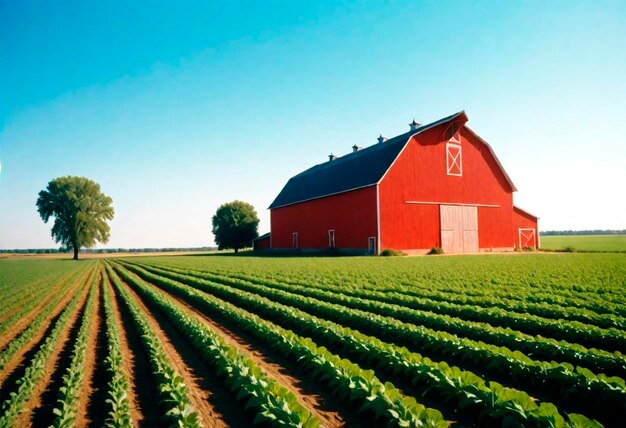
1. Early Spring On The Farm
The sun cracked open over the flat horizon like an egg spilling light across the dry, brittle earth on the Keller Family Farm. Martin Keller stood at the edge of the east field, arms crossed, staring out over a stubbled sea of corn stalks long since reaped. The soil was hard, parched, and stubborn — just like his father used to say. Forty-three years old, and this land had been beneath his fingernails every day of his life.
Four hundred acres. His grandfather carved it from the prairie in 1913, back when oxen still plowed the first furrows and the land gave willingly. His father expanded it after the war, bringing in tractors, silos, irrigation rigs. Martin had inherited it in ’78, just after his father’s second stroke. He had come home from a semester short of finishing an ag-science degree at the university in Lincoln. Never gone back.
Now, ten years later, the payments on the second mortgage were six months behind. Interest rates were over 12%, and the co-op had just cut his line of credit. There were too many empty barns and too few profitable harvests. What the hail didn’t take, the drought finished off. And what survived wasn’t worth much at market.
He walked back to the house, boots crunching the frozen topsoil. It was March, but it still felt like February. His wife, Denise, met him at the door, her flannel robe wrapped tight, the kettle screeching behind her.
“Phone call came through from Fremont Savings,” she said, eyes tired. “They want to talk again. Said something about restructuring.”
“Restructuring,” Martin muttered. “That’s what they call taking the rest of the place now?”
“Maybe they’re giving you an option.”
“Only option left is selling it off the family farm piece by piece, Den.”
She didn’t say anything. She just poured his coffee and kissed his cheek. They hadn’t argued in months, but not because the tension wasn’t there. There just wasn’t enough energy for yelling anymore. Just exhaustion and silence.
2. The Visit
It was three days later when the man from the bank came to the farm. Rick Albee, thirty-something, all shiny boots and Midwest charm. Drove up in a Chevy Caprice that looked too polished to have ever seen a gravel road.
Martin served him coffee at the kitchen table. Denise stayed upstairs. She said she didn’t want to hear the sound of hope being negotiated.
“Martin, I won’t waste your time. I’ll level with you,” Rick said, adjusting his tie like it belonged to someone more comfortable in it. “You’re past due, and we both know the numbers. This year doesn’t look any better than the last.”
Martin sipped slowly. “Weather holds, I can get two-thirds of the acreage into beans. Maybe some winter wheat. We might break even.”
“You haven’t broken even in four years, Marty.”
Rick always called him Marty. No one else ever had.
Rick tapped a manila folder. “Look, here’s what I can do. We file Chapter 12. It buys you time. Maybe enough to consolidate with a neighbor, scale down the farm, maybe lease out a field or two…”
Martin’s fingers curled around his mug. “And then what?”
“You keep a roof over your head. Keep your name on a few deeds. Maybe even retire one day.”
“I don’t want a few deeds,” Martin said, voice sharp. “I want my land. All of it.”
Rick held up a hand. “I get it. But this ain’t 1950. The farming game changed. The corporations are squeezing out folks like you.”
Martin stood slowly, setting his mug down with a quiet thud. “Tell Fremont Savings to send the paperwork. I’ll look it over.”
Rick nodded, picked up his folder. “I wish it didn’t have to be this way.”
“No you don’t,” Martin said, opening the door. “You just wish it was faster.”
3. Letters from the Past
Later that evening, Martin found himself in the attic. He hadn’t meant to go up there, but something about the day pushed him upward, like a current in reverse. He dug through an old cedar trunk, pulling out yellowed envelopes and brittle photographs.
One was a letter from his grandfather to his father in 1946. Handwritten in perfect script.
“This land will only forgive you if you treat it like kin. Not property. Remember that.”
Another was a journal from his dad, 1961. The drought year. Page after page of handwritten prayers and tally marks tracking rainfall and expenses.
Martin sat back and lit a cigarette. He hadn’t smoked in a year. But some days, the old vices felt like old friends.
4. The Boy
Ben, Martin’s twelve-year-old son, came home from school that Friday, face flushed and knuckles bruised.
“What happened?” Denise asked, wiping at his scraped skin.
“Travis Jenkins said we’re broke. Said his dad read it in the paper. Said we’re gonna have to move to Omaha and live in a trailer park.”
Martin knelt, meeting his boy’s eyes. “You listen to me, Ben. This land is in your blood. That matters more than what some boy at school says.”
“But is it true?”
Martin looked away. “It’s…complicated.”
Ben nodded, wiping his nose. “Can I help this year? I can learn the tractor. You said when I turned thirteen.”
Martin smiled, aching. “We’ll see.”
5. The Auction
In May, they held an auction for the back 80 acres — the section his father had added in the ’60s. The land bordered the river, beautiful loam and deep roots. A dozen bidders showed. Most were neighbors. A few were men in clean boots and city haircuts.
It sold for far less than it was worth.
Martin didn’t stay to watch the final gavel. He walked to the edge of the remaining field and sat on the back of the flatbed. Watched the wheat sway in the breeze like it was waving goodbye.
That night, he found Denise crying in the kitchen.
“I thought once we sold that section, things might feel lighter. But it just feels…wrong.”
Martin held her. It was the first time in months they’d held each other without the weight of the world between them.
6. The Storm
In late July, just when the soybeans were peaking and there was finally some hope in the air, a storm tore across the plains. Straight-line winds toppled two irrigation rigs. Hail stripped half the crop clean off.
The next morning, Martin walked the field in silence. The plants were shredded, the soil slick with mud. He collapsed to his knees, hands buried in the broken leaves, and screamed. Just once. Long and low.
Ben saw him from the window, but said nothing. He just waited by the barn until his father came in.
7. The Decision
August came. Martin sat on the porch with Denise, watching dust trail off a neighbor’s combine across the western fence.
“I’m thinking of taking that job at the grain elevator,” he said. “It’d pay steady. Benefits. I could still do the home section on weekends.”
Denise nodded. “You’re not giving up?”
“No. Just…changing how I fight.”
She rested her head on his shoulder.
That night, he wrote a letter to Ben. Slipped it in an envelope and tucked it in the boy’s Bible.
“If you read this someday, I want you to know: I didn’t leave the land. I just found another way to love it. If you ever want to come back and try again, I hope there’s still something here for you.”
8. Epilogue — Years Later
In 2015, Ben Keller — now thirty-nine — drove past the old section road with his own son, a college freshman in the passenger seat. The main barn still stood, though the paint had faded to dust. Two hundred acres remained in the family. Martin, now retired, lived in a small farmhouse nearby.
Ben pulled over and stepped out, walking the edge of the field.
His son followed. “So this is it?”
Ben nodded. “Your great-great-grandfather broke this land with a mule. My dad nearly lost it trying to keep it going. Now it’s leased to an organic co-op. Pays for your grandma’s meds.”
“Ever think of farming it again?”
Ben smiled. “Sometimes. But I think Dad was right. You don’t have to work the land to love it. You just have to remember where you come from.”
The wind stirred the wheat. And for a moment, it sounded like applause.
 A Life Of Mental Illness
this is so good! I really enjoyed it! 🙂